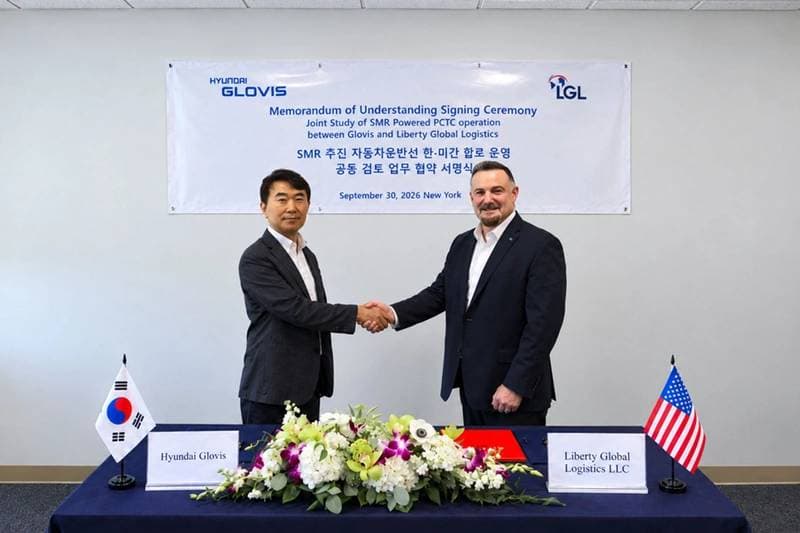
Liberty Global Logistics (LGL) and Hyundai Glovis have formally agreed to collaborate on a study assessing the feasibility of developing and operating Pure Car and Truck Carriers (PCTCs) utilizing small modular reactor (SMR) technology for propulsion. This memorandum of understanding signifies a joint effort to explore innovative, zero-emission solutions for the automotive shipping sector.
This development comes as the maritime industry faces increasing pressure to decarbonize and meet stringent environmental regulations. Nuclear propulsion, particularly through SMRs, offers a potential pathway to significantly reduce greenhouse gas emissions and reliance on fossil fuels. The initiative reflects a broader trend within shipping to invest in research and development for alternative energy sources.
For freight forwarders and logistics professionals, the successful development of nuclear-powered vessels could eventually lead to more stable and predictable transit times, as these ships would be less susceptible to fuel price volatility. It also aligns with growing shipper demand for greener supply chain options, potentially offering a competitive advantage for carriers and forwarders who can provide such services. However, the regulatory and safety frameworks for nuclear-powered commercial vessels are complex and would require significant international cooperation and approval.
The initial focus of the study will be on technical, operational, and regulatory aspects, including safety protocols and infrastructure requirements. The companies will evaluate the economic viability and environmental benefits of SMR-powered PCTCs, aiming to establish a pathway for their potential deployment in the future.