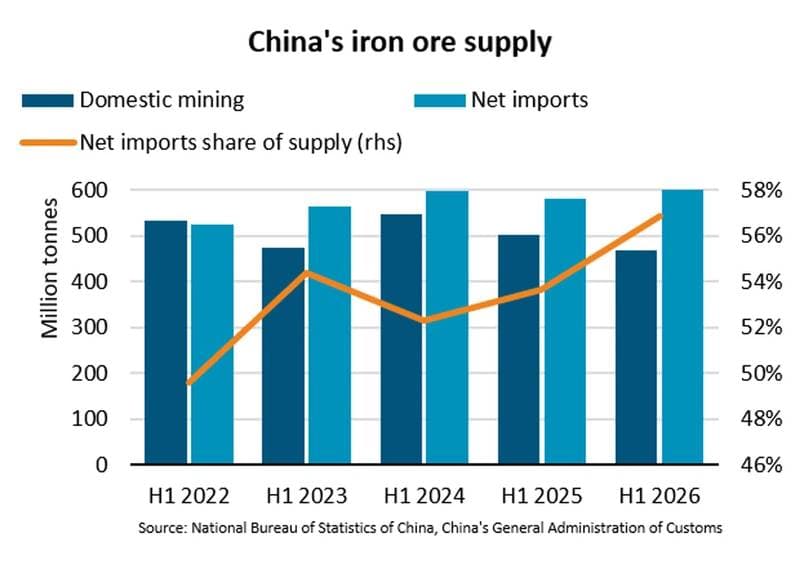
In the first half of 2026, China experienced a 7% year-on-year decline in its domestic iron ore mining activities. This reduction was primarily influenced by two factors: a 6% year-on-year rise in net iron ore imports and a general softening in steel production within the country. China is increasingly turning to international markets to procure its iron ore, largely because imported ore often boasts a higher grade and is available at more competitive prices compared to domestically sourced alternatives.
For freight forwarders and logistics professionals, this trend indicates a sustained demand for dry bulk shipping, particularly for Capesize and Panamax vessels transporting iron ore into China. The shift towards imports suggests continued port activity at major Chinese iron ore receiving terminals. Forwarders should monitor global iron ore prices and steel production forecasts, as these directly influence shipping volumes and potentially freight rates for bulk carriers on key trade lanes, especially from Australia and Brazil.