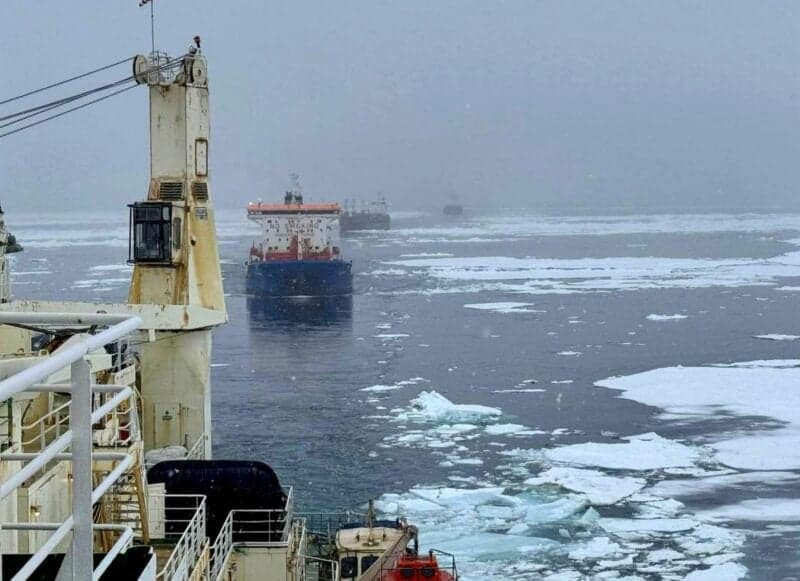
Russia recently deployed the first conventional, non-ice-class LNG carrier of the year to its Arctic LNG 2 project, which is currently under Western sanctions. This deployment occurs as a significant number of crude oil tankers are gathering in the vicinity, signaling preparations for a summer push through the Northern Sea Route (NSR).
This development underscores Russia's strategic pivot towards Arctic shipping lanes to maintain and expand its energy export capabilities, particularly in the face of ongoing international sanctions. The use of conventional LNG carriers, rather than specialized ice-class vessels, for this route could indicate an adaptation to operational challenges or a broader strategy to utilize available fleet capacity.
For freight forwarders and logistics professionals, this situation suggests potential shifts in global energy trade routes and increased activity in the Arctic. While direct impact on containerized cargo is minimal, the heightened use of the NSR for energy exports could influence vessel availability in other regions or lead to new infrastructure developments in the Arctic, potentially affecting future transit options. Forwarders engaged in project cargo or specialized logistics for the energy sector may find new opportunities or challenges related to these evolving Arctic operations. The reliance on the NSR also highlights the geopolitical complexities influencing shipping decisions.