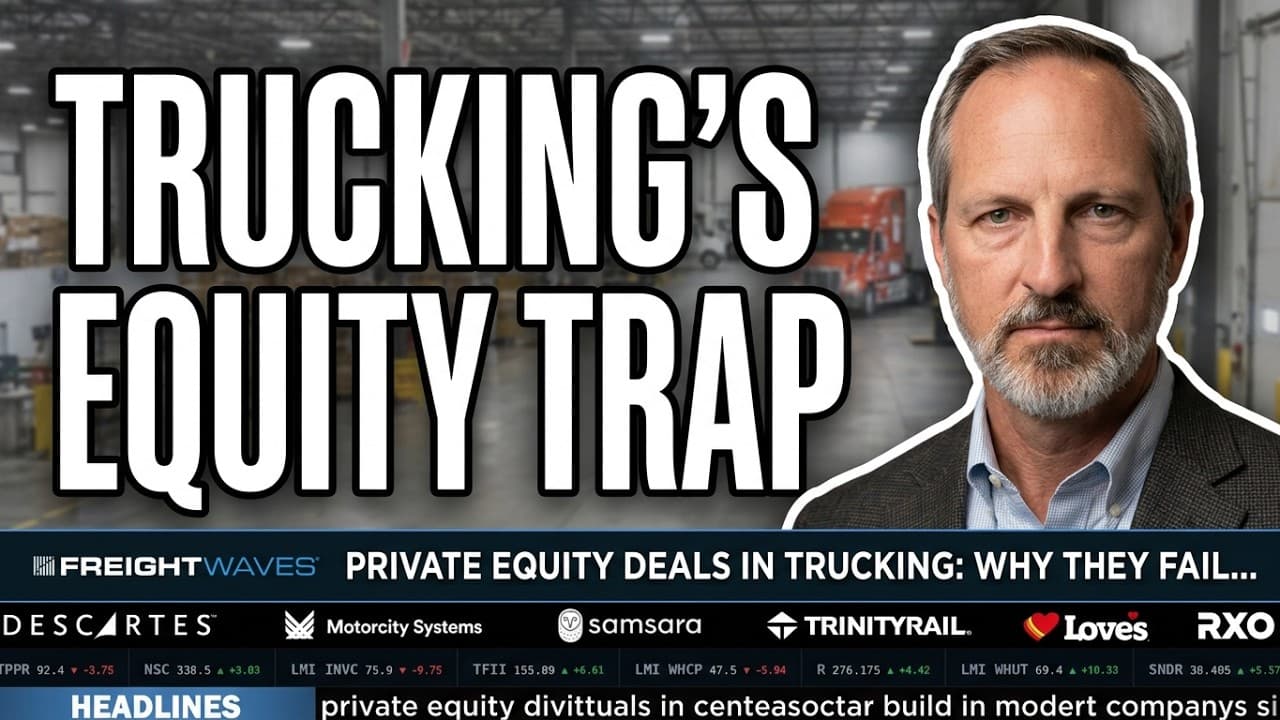
Private equity investments in asset-based trucking companies have a challenging history, with many deals failing to meet expectations. According to Spencer Tenney of The Tenney Group, the sector's track record for traditional private equity models is particularly difficult. This often stems from a fundamental mismatch between typical private equity strategies and the operational realities of trucking.
Success in this niche requires a deep understanding of the cyclical nature of the freight market and the ability to partner with existing management teams who possess extensive industry expertise. A notable exception to the trend of failures is the nine-figure Texas Trans Eastern deal, which demonstrated that specialized freight investments can be highly successful when these critical ingredients are present.
For freight forwarders and logistics professionals, this trend in private equity investment can indirectly influence the stability and long-term strategy of their carrier partners. When private equity enters the market, it can lead to consolidation, changes in operational focus, or shifts in pricing strategies, which might affect capacity availability or service levels. Understanding the financial health and ownership structure of trucking partners can provide insights into their potential resilience during market fluctuations.
Moving forward, private equity firms looking to invest in asset-based trucking will likely need to adopt more specialized approaches, focusing on long-term partnerships and operational excellence rather than short-term financial engineering. The emphasis will be on identifying companies with strong leadership and a clear understanding of their market segment.