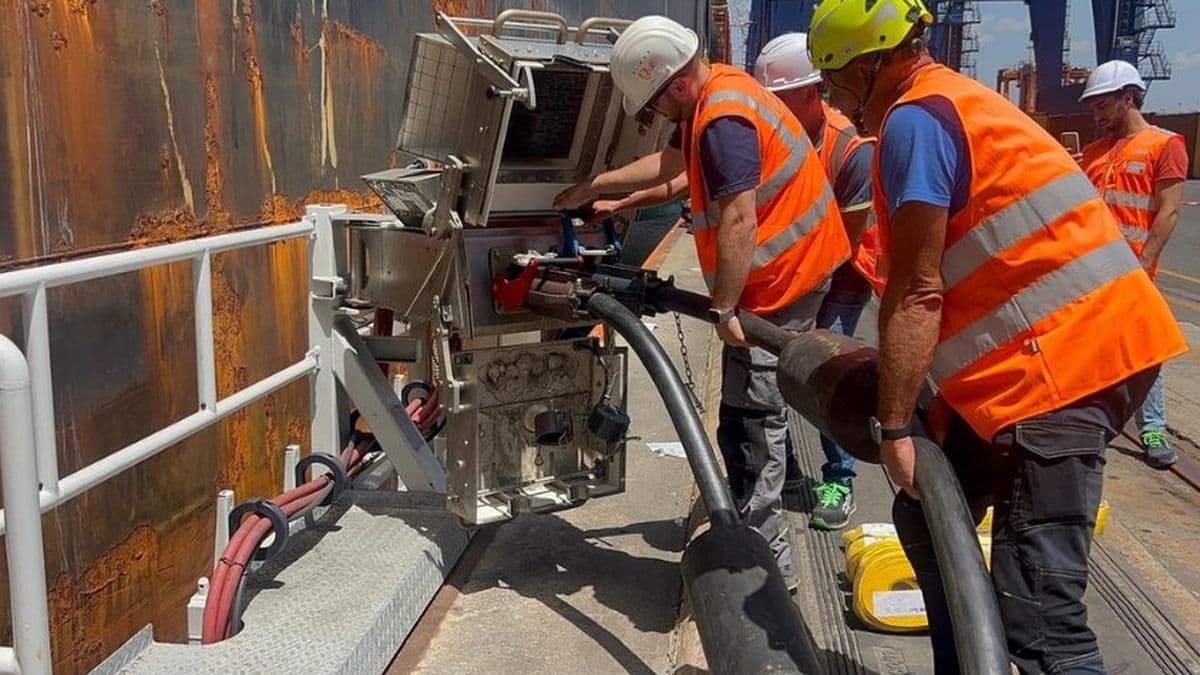
The Port of Gioia Tauro, located in Italy, has successfully conducted its first cold ironing procedure on a container ship. This achievement marks a significant step in the port's commitment to environmental sustainability and reducing its carbon footprint. By connecting to shore power, vessels can shut down their auxiliary engines while berthed, thereby eliminating exhaust emissions and noise pollution in the port area.
This development aligns with broader industry efforts to decarbonize maritime operations and meet increasingly stringent environmental regulations. The adoption of cold ironing technology is crucial for ports aiming to enhance air quality for local communities and contribute to global climate goals.
For freight forwarders and shippers, the expansion of cold ironing capabilities at key ports like Gioia Tauro signals a growing trend towards greener logistics chains. While direct rate impacts may not be immediate, this move contributes to the overall sustainability profile of shipping routes, which can be a factor in carrier selection and compliance with ESG mandates. It also indicates a potential for future operational changes as more ports invest in such infrastructure, possibly influencing vessel turnaround times or port call preferences based on environmental incentives.
This initial operation is expected to pave the way for more widespread adoption of shore power at Gioia Tauro, supporting the port's long-term environmental objectives.