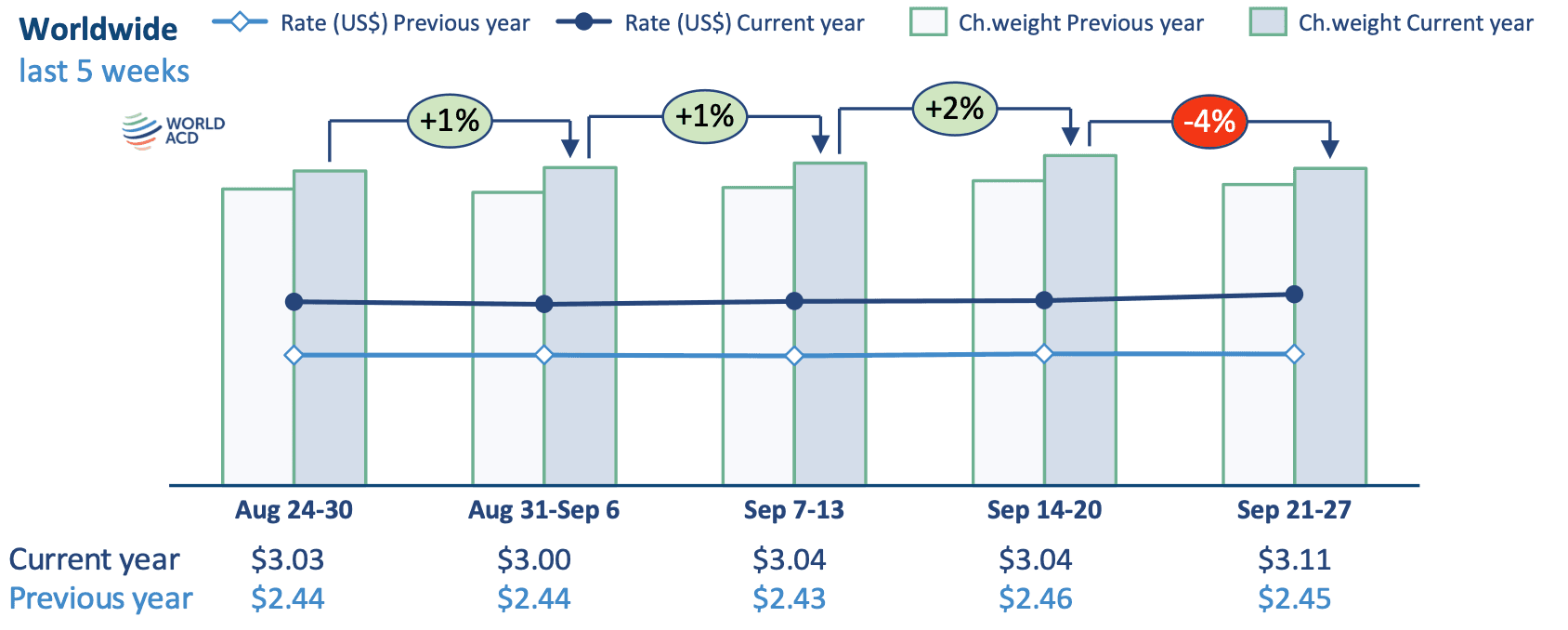
Global air freight rates have continued their downward trend, with the Baltic Air Freight Index (BAI00) recording a 2.7% decrease in the week leading up to July 6. This marks a sustained softening in the market. Despite these recent declines, overall airfreight rates are still 27.7% higher compared to the same period last year.
A key factor influencing this reduction in pricing pressure is the ongoing decrease in jet fuel costs. Lower fuel expenses typically translate to reduced operational costs for air carriers, which can then be reflected in freight rates.
For freight forwarders and operations managers, this sustained softening in airfreight rates, coupled with lower fuel prices, could present opportunities for more competitive pricing and improved margins on air cargo shipments. However, the mixed trends observed in major Asian export markets suggest that rate negotiations may still require careful attention to specific trade lanes and origins. Monitoring the BAI00 and fuel price fluctuations will be crucial for strategic planning and quoting.
Looking ahead, the interplay between fuel costs, demand from key export regions, and overall air cargo capacity will continue to shape rate movements. Forwarders should anticipate continued volatility but also potential for more favorable pricing in the short to medium term if fuel prices remain subdued.