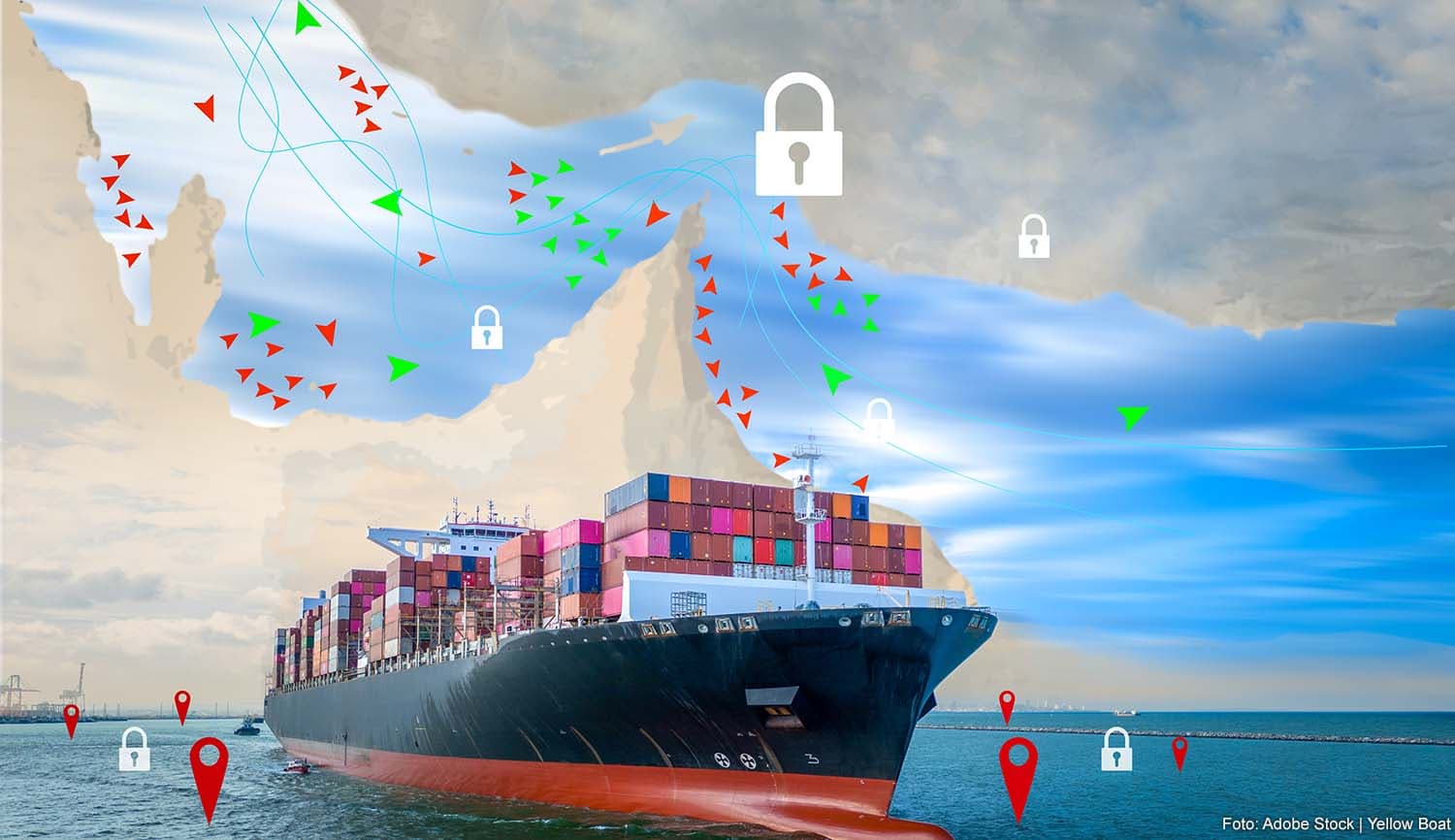
Credit insurance provider Atradius has issued a warning that a long-term closure of the Strait of Hormuz, resulting from a potential escalation in the conflict between the United States and Iran, could precipitate a global economic recession. According to their latest semi-annual Economic Outlook, this scenario could see worldwide economic growth decline to 1.9%.
This assessment highlights the critical importance of the Strait of Hormuz, a narrow waterway essential for global oil and gas shipments, connecting the Persian Gulf to the open ocean. Any significant disruption to transit through this strait would have profound implications for energy markets and, consequently, the broader global economy.
For freight forwarders and supply chain managers, a closure of the Strait of Hormuz would be catastrophic. It would severely disrupt major shipping lanes for crude oil and LNG, leading to massive delays, rerouting requirements, and substantial increases in bunker prices and war risk premiums. Capacity for alternative routes would be extremely limited, and rates for all cargo, not just energy, would likely skyrocket due to increased operational costs and insurance surcharges. Forwarders would need to immediately assess alternative routing options, manage client expectations regarding delays and costs, and navigate complex insurance claims related to force majeure or cargo loss.
While the report does not specify immediate next steps, it underscores the need for businesses to consider geopolitical risks in their supply chain planning and contingency strategies.