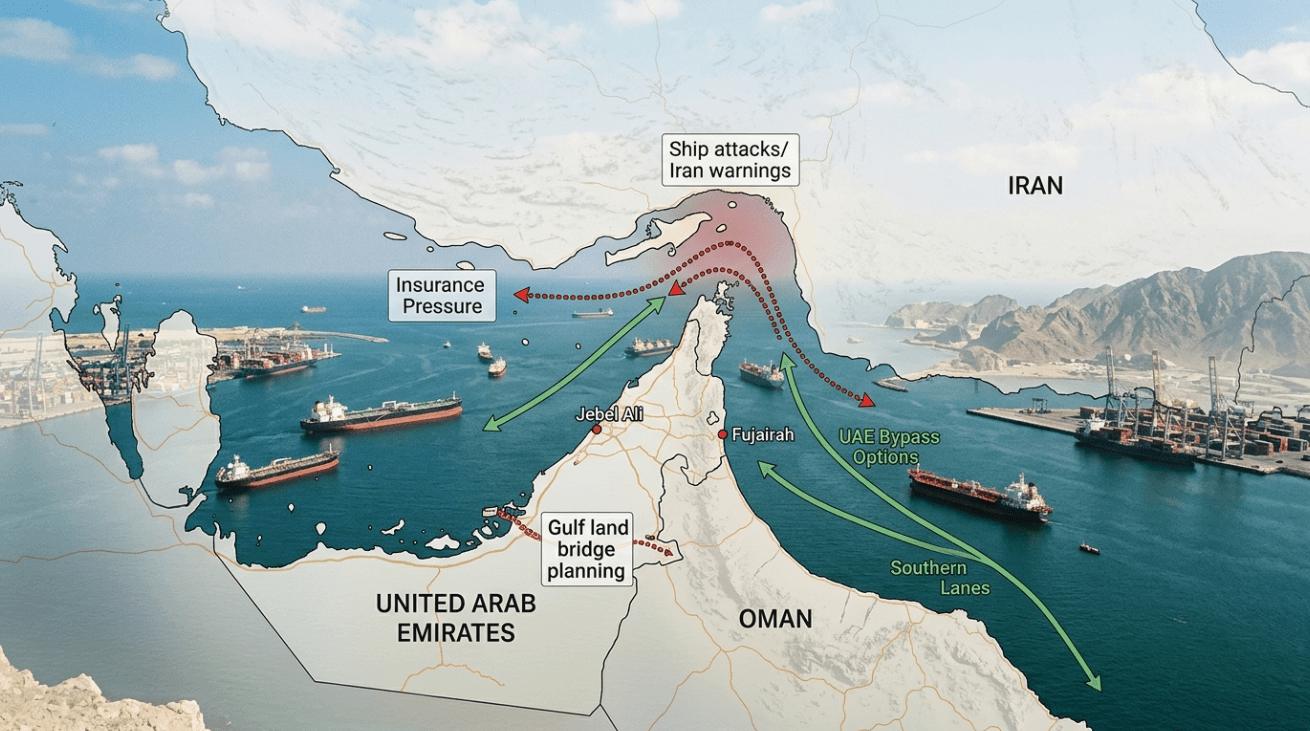
Shipowners are currently reassessing their routing strategies for cargo transiting the Arabian Gulf, specifically concerning the Strait of Hormuz. This re-evaluation is a direct response to escalating tensions, including explicit warnings from Iran and a series of recent attacks on vessels in the region. Consequently, insurance premiums for voyages through this critical chokepoint have increased, prompting cargo interests to seek less volatile alternatives.
For freight forwarders and shippers, this situation necessitates a careful review of supply chain resilience and risk management. The potential for disruptions in the Strait of Hormuz could lead to longer transit times and increased operational costs if vessels are forced to take alternative, longer routes. Capacity might also be affected as carriers adjust their services. Forwarders should communicate proactively with clients about potential delays and surcharges, especially for time-sensitive or high-value project cargo.
Alternative strategies being considered include utilizing southern shipping lanes and exploring land bridge options through the United Arab Emirates. These bypass routes aim to circumvent the immediate risk zone, offering a degree of security for shipments. However, such alternatives may introduce their own logistical complexities, including additional handling and potential delays at transshipment points or border crossings. The focus is particularly on project cargo, which often involves oversized or heavy-lift components, making route flexibility and risk mitigation paramount.