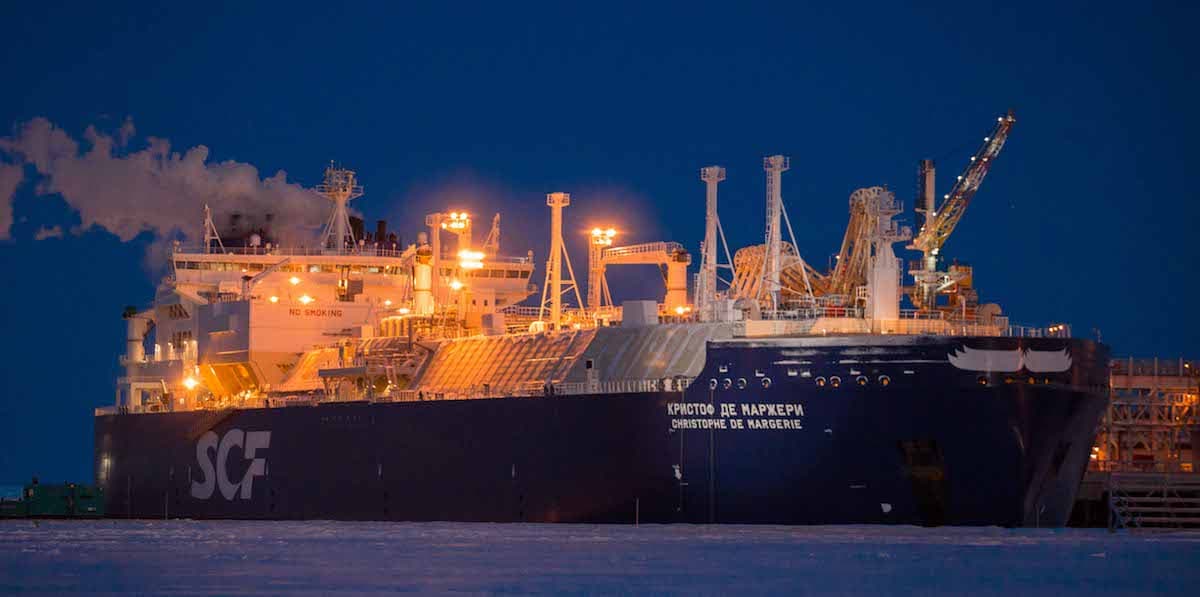
Russia has commenced its seasonal eastern export corridor for liquefied natural gas (LNG) originating from the sanctioned Arctic LNG 2 project. This reactivation was signaled by the icebreaking LNG carrier Christophe de Margerie, which completed a rare early-summer transit along the Northern Sea Route (NSR). This voyage effectively marks the beginning of the 2026 navigation season for LNG shipments from the Russian Arctic to Asian destinations.
This development underscores Russia's ongoing strategy to utilize the Arctic as a key route for its energy exports, particularly for LNG, in the face of international sanctions. The early transit of an icebreaking vessel suggests a proactive approach to maximizing the operational window of the NSR, which traditionally has a shorter navigation season due to ice conditions.
For freight forwarders and supply chain analysts, the reopening of this route means an additional, albeit specialized, option for energy commodity flows from Russia. While direct involvement in sanctioned Russian projects may be limited for many, the increased activity on the NSR could influence global LNG supply dynamics and potentially impact shipping capacity in other regions if more vessels are diverted to Arctic routes. The early start to the navigation season also suggests a longer period of potential activity, which could offer more flexibility for specialized LNG carriers.
Looking ahead, the continued use and expansion of the Northern Sea Route for energy exports will be closely watched. Further early transits or an extended navigation season could solidify the NSR's role as a significant trade artery, particularly for countries in Asia seeking diverse energy sources.