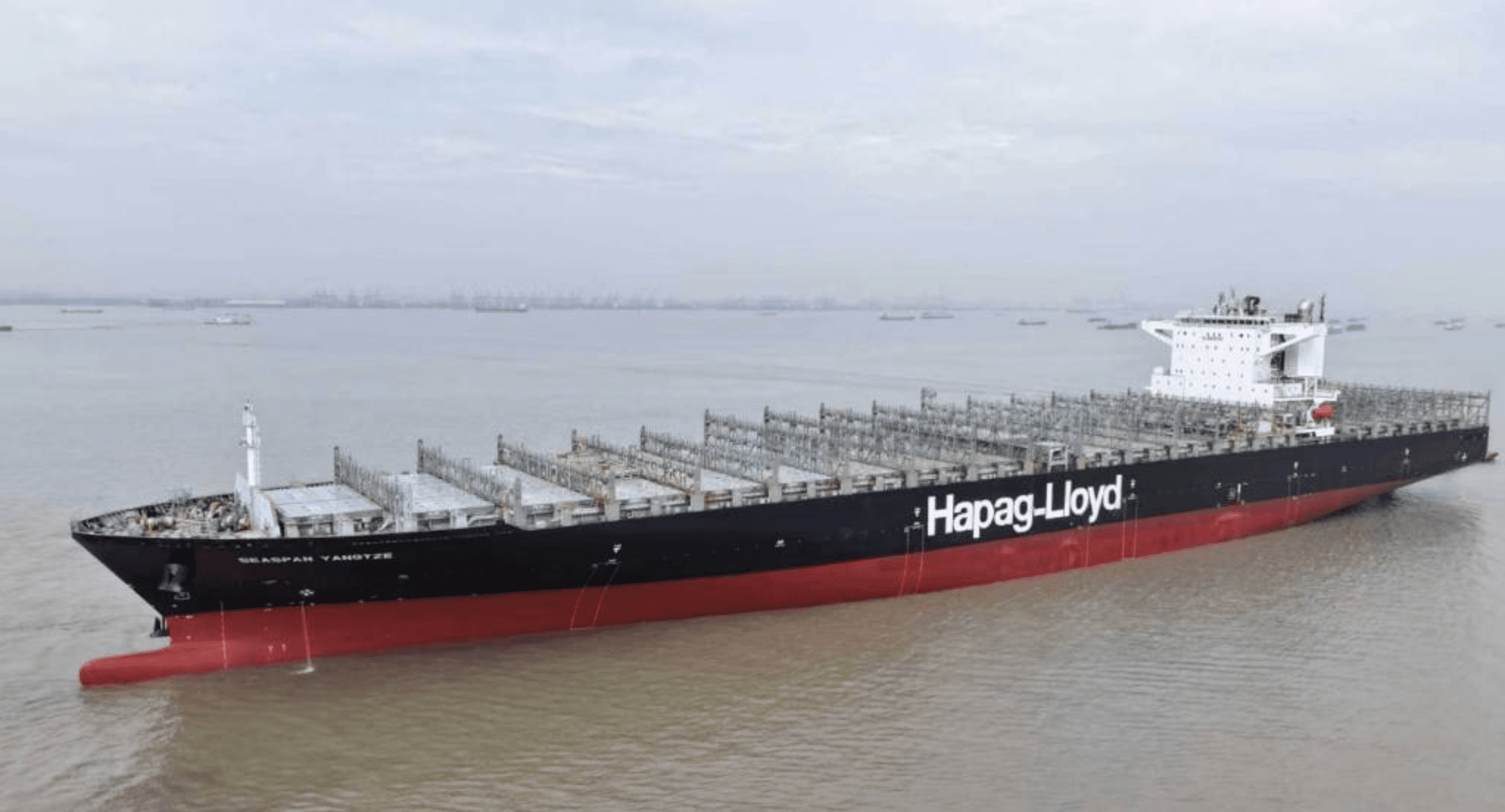
Hapag-Lloyd and Seaspan have successfully finalized the first methanol dual-fuel conversion as part of a five-vessel decarbonization initiative. The Seaspan Yangtze, a container vessel, has been adapted to operate on both conventional fuel and methanol, marking a significant step in the companies' sustainability efforts.
This retrofit is part of a broader strategy by Hapag-Lloyd to integrate alternative fuels into its fleet, aligning with global maritime decarbonization goals. The collaboration with Seaspan, a major container ship owner, highlights the industry's move towards more environmentally friendly shipping solutions.
For freight forwarders and shippers, this development signals a continued trend towards sustainable logistics. While immediate impacts on rates or capacity may be minimal, it contributes to the long-term availability of greener shipping options. Shippers focused on reducing their Scope 3 emissions may find these services increasingly attractive, potentially influencing carrier selection and future green surcharges. The availability of such vessels could also support compliance with evolving environmental regulations.
The completion of this first vessel conversion sets the stage for the remaining four ships in the program to undergo similar modifications, further expanding Hapag-Lloyd's dual-fuel fleet.