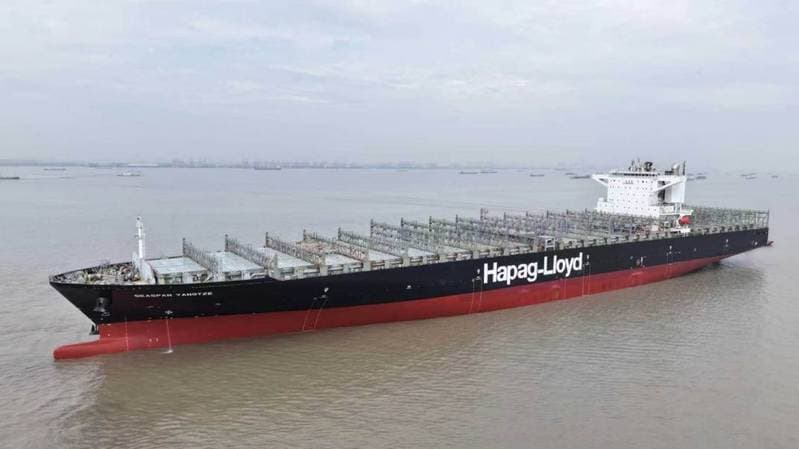
Hapag-Lloyd and Seaspan Corporation have successfully completed the first methanol engine retrofit on a container vessel, the *Seaspan Yangtze*. This vessel, with a capacity of 10,100 TEU, is the first of five charter ships slated for conversion under their collaborative program. The upgrade involves modifying the main engine to a dual-fuel MAN B&W 8G95ME C10.5-LGIM type, allowing it to operate on both conventional fuel and methanol.
This initiative is part of a broader industry trend towards decarbonization, with carriers investing in vessel modifications and newbuilds capable of running on alternative fuels. Methanol is gaining traction as a viable option due to its potential for significant greenhouse gas emission reductions.
For freight forwarders and shippers, this development signals a gradual shift towards more sustainable shipping options. As more vessels are converted or built with dual-fuel capabilities, the availability of green shipping services will increase. This could lead to new routing options and potentially influence freight rates for environmentally conscious cargo, as demand for lower-emission transport grows. Forwarders should monitor the availability of such services and their associated costs to advise clients on sustainable supply chain strategies.
The remaining four vessels in the program are expected to undergo similar conversions, contributing to Hapag-Lloyd's goal of reducing its carbon footprint.