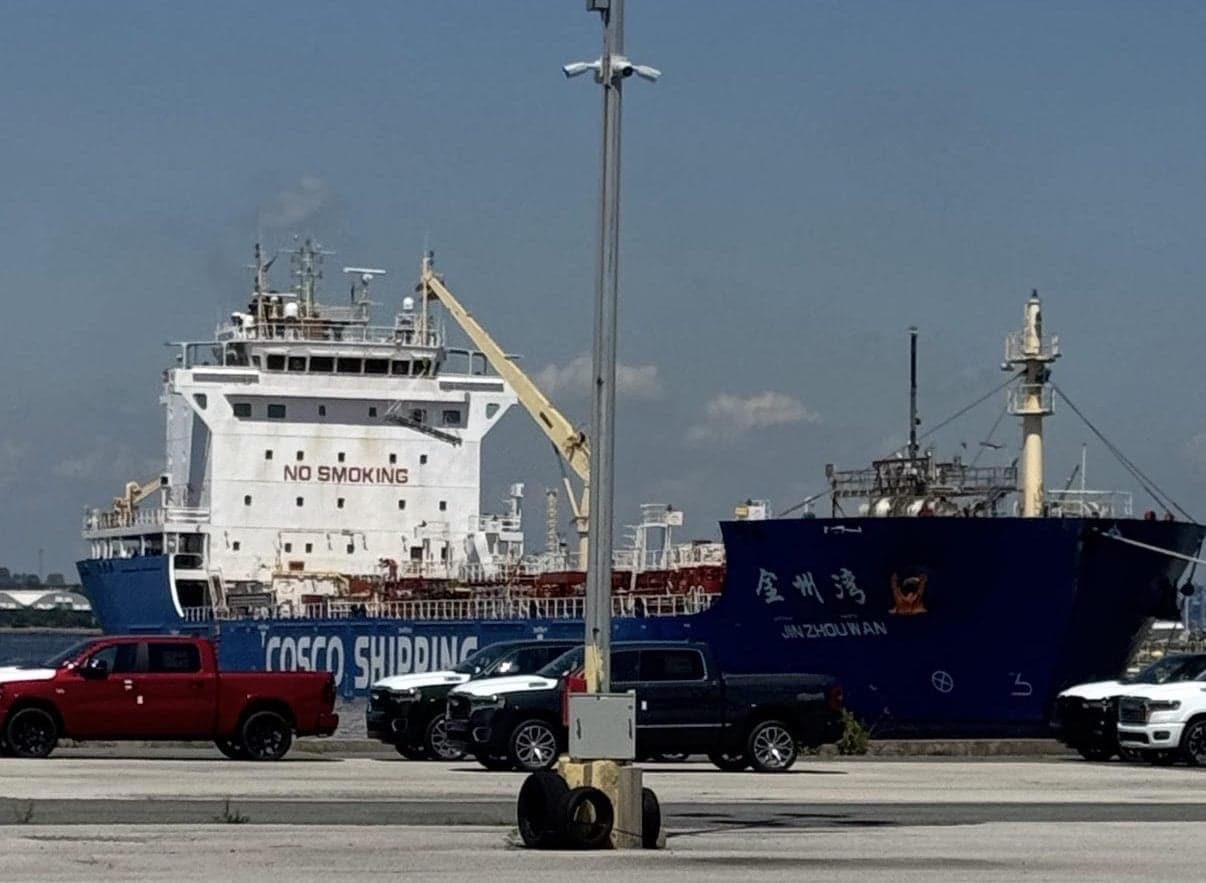
A Chinese-owned tanker has completed its second domestic U.S. coastwise voyage transporting asphalt, operating under an emergency waiver of the Jones Act. This exemption, initially granted by the Trump administration, permits foreign-flagged vessels to carry cargo between U.S. ports, a practice typically reserved for U.S.-flagged, U.S.-built, and U.S.-crewed ships.
The repeated use of this waiver has raised questions regarding its ongoing necessity, especially in light of a recent Memorandum of Understanding (MoU) between the United States and Iran. This agreement aims to reopen the Strait of Hormuz and alleviate ongoing hostilities, which were previously cited as a justification for the national security exemption.
For freight forwarders and operations managers, the continued use of Jones Act waivers, even if temporary, can introduce an element of uncertainty into domestic U.S. shipping. While such waivers might offer short-term capacity relief or cost advantages by allowing foreign vessels, they also underscore the fragility of relying on exemptions from established maritime law. Forwarders should monitor the political landscape and the status of these waivers, as their revocation could impact domestic routing options and potentially increase costs for certain bulk commodities if U.S.-flagged capacity is limited. The broader implication is a potential shift in domestic maritime policy, which could influence future vessel availability and pricing for intra-U.S. shipments.