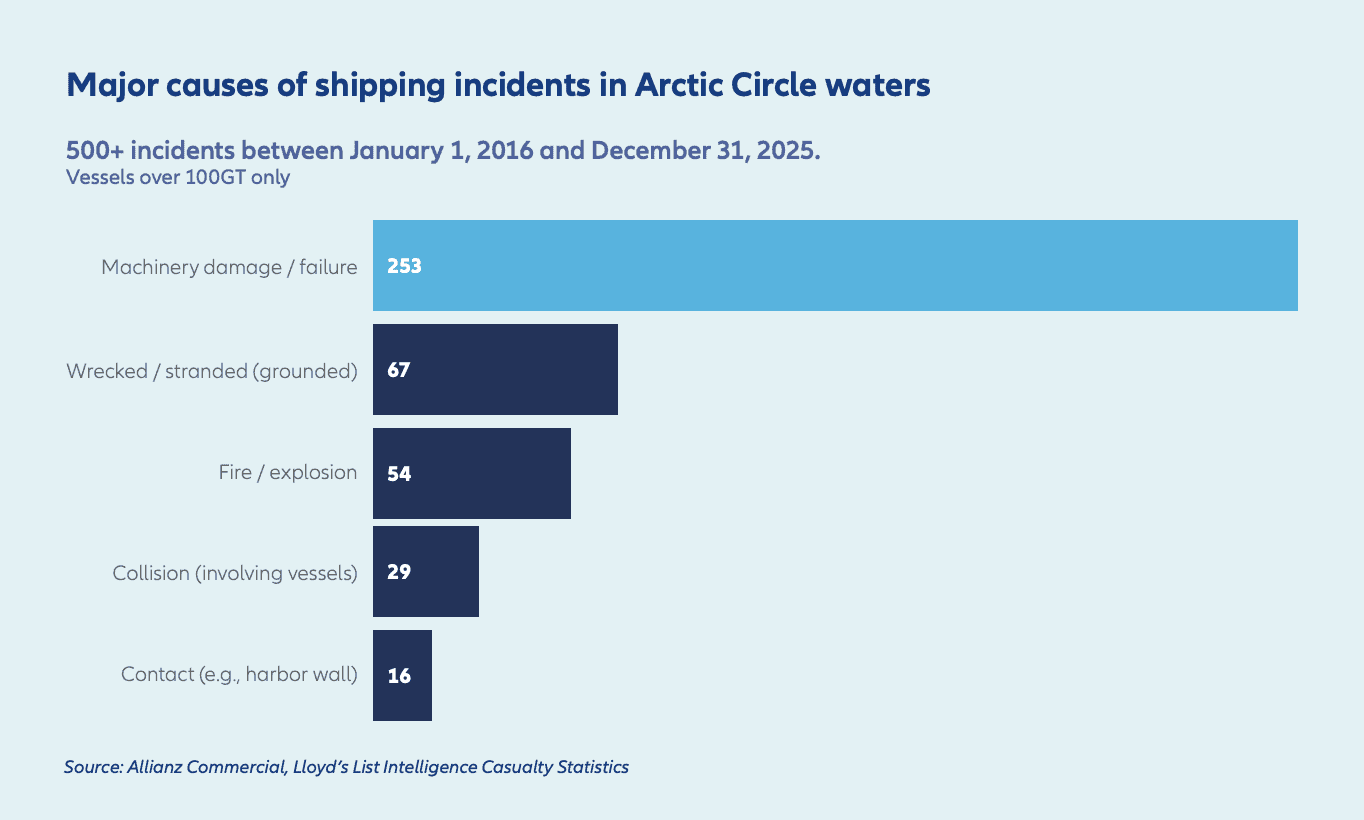
Allianz Commercial has issued a cautionary report regarding the increasing interest in Arctic shipping routes, emphasizing that the region remains one of the most hazardous for commercial maritime operations. Despite the allure of shorter transit times between Asia and Europe, driven by receding sea ice and global geopolitical disruptions, the insurer points to substantial challenges.
The primary concerns include extreme weather conditions, the absence of robust search and rescue capabilities, and limited port infrastructure. Furthermore, the geopolitical landscape, including international sanctions and territorial disputes, adds layers of complexity and risk for vessels operating in these waters. These factors collectively increase the potential for incidents and hinder the development of reliable shipping services.
For freight forwarders and shippers, this analysis suggests that while Arctic routes might appear attractive on paper for their speed, the practical implications involve higher insurance premiums, increased operational risks, and potential delays due to severe conditions or geopolitical complications. Capacity on these routes is likely to remain limited and specialized, making them unsuitable for mainstream container traffic in the near term. Forwarders must carefully weigh the cost savings against the elevated risks and lack of established support infrastructure when considering Arctic transits.
Allianz's assessment indicates that without significant investment in infrastructure, enhanced safety protocols, and a more stable geopolitical environment, the Arctic's potential as a major global shipping lane will remain largely unfulfilled, despite the ongoing climatic changes.