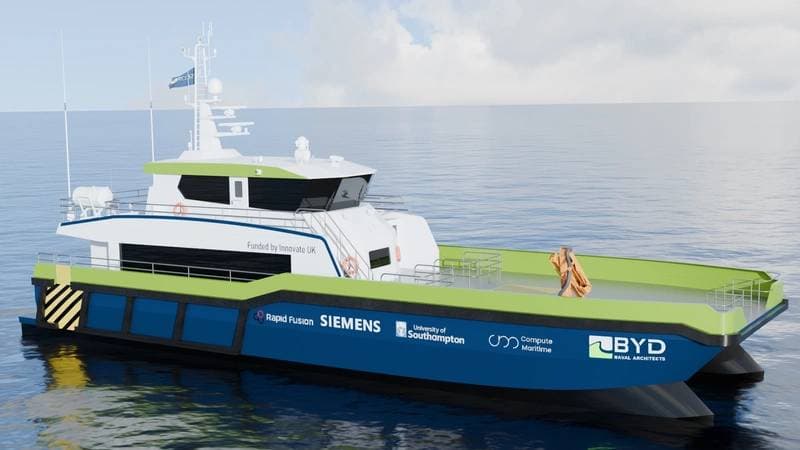
Compute Maritime, a deep tech firm known for its NeuralShipper AI platform, has unveiled the positive outcomes of its UK Government-backed initiative, GenDSOM. This project focused on integrating generative AI and additive manufacturing into ship design, specifically applied to a Crew Transfer Vessel (CTV).
The results indicate that the AI-optimized CTV can save approximately 100,000 liters of fuel and reduce CO2 emissions by 258 tons annually. This advancement highlights the potential of AI to enhance vessel efficiency and contribute to maritime decarbonization goals.
For freight forwarders and logistics professionals, while this specific article focuses on CTVs, the underlying technology of AI-driven ship design could eventually lead to more fuel-efficient cargo vessels. This would translate into lower operational costs for carriers, potentially influencing freight rates positively in the long term, and contributing to more sustainable supply chains. Increased fuel efficiency also improves schedule reliability by reducing the need for frequent bunkering or allowing for more flexible routing.
The successful implementation of AI in this project suggests a future where vessel design is increasingly data-driven and optimized for performance and environmental impact.