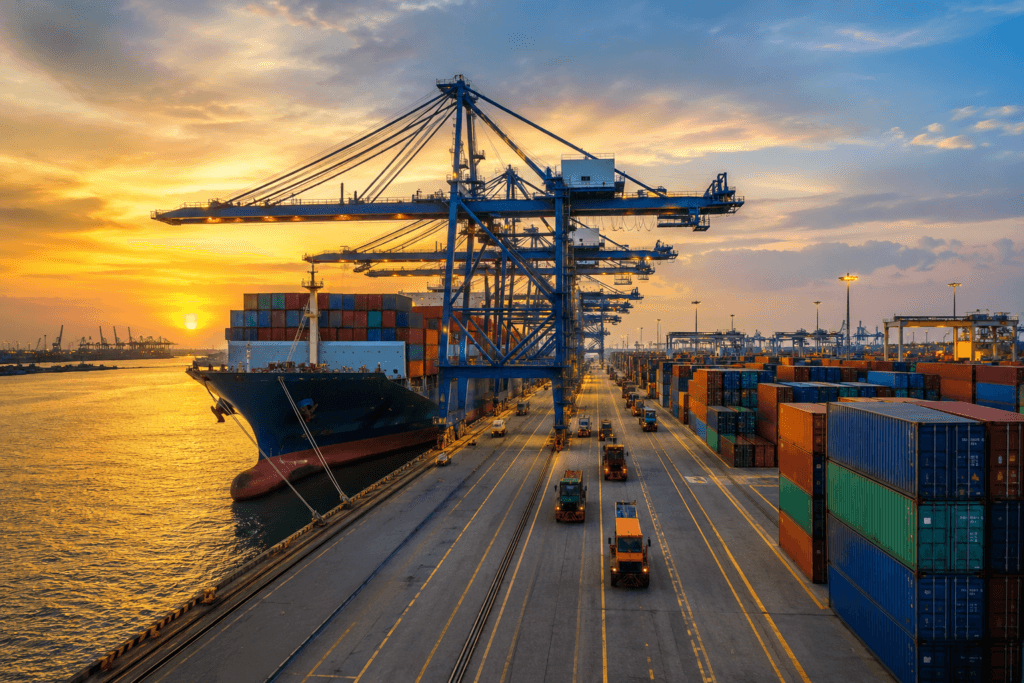
The National Association of Waterfront Employers (NAWE) has highlighted a critical investment shortfall for US ports, estimating that US$6.7 billion is needed over the coming years. This figure, derived from a survey of 25 senior port and terminal executives, underscores the necessity for substantial funding to maintain competitiveness, modernize operations, and bolster supply chain resilience across the United States.
This investment is crucial for US ports to keep pace with global standards and address ongoing challenges such as port congestion, equipment upgrades, and the integration of new technologies. Without this funding, US ports risk falling behind international competitors, potentially impacting trade flows and economic growth.
For freight forwarders and operations managers, this investment gap signals potential future challenges. Underfunded ports may lead to slower turnaround times, less efficient cargo handling, and increased operational costs. Conversely, successful investment could result in improved port infrastructure, faster vessel processing, and enhanced intermodal connections, ultimately benefiting supply chain efficiency and potentially stabilizing or reducing freight costs. Forwarders should monitor these investment initiatives closely as they directly influence port performance and routing decisions.
The survey's findings suggest that a concerted effort from both public and private sectors will be required to bridge this funding gap, ensuring US ports can meet the evolving demands of international trade and maintain their vital role in the global supply chain.