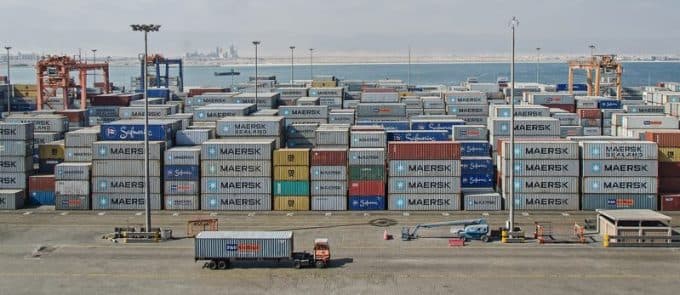
Authorities in the Middle East have introduced an additional multimodal trade corridor linking the United Arab Emirates and Oman. This development is part of a broader strategy to enhance the resilience and efficiency of regional supply chains by offering alternative routes for cargo movement. The corridor integrates various transportation methods, including road, rail, and sea, to facilitate the seamless transit of goods.
The primary objective of this new corridor is to decrease the dependency on traditional port-to-port shipping routes, which can be susceptible to disruptions. By diversifying transit options, the initiative aims to ensure continuous cargo flow, even when direct maritime links face challenges. This approach supports the broader regional goal of creating integrated trade networks that can adapt to evolving logistical demands.
For freight forwarders and operations managers, this new corridor presents increased flexibility in routing shipments between the UAE and Oman, and potentially beyond. It could lead to more stable transit times and potentially offer cost efficiencies by optimizing the use of different transport modes. Forwarders should evaluate these new options to identify the most effective and reliable pathways for their clients' cargo, especially for intra-Gulf movements.
While the immediate impact is on regional connectivity, the long-term vision for such corridors often includes integration into wider international trade networks. This could eventually provide more robust alternatives for cargo moving through or within the Gulf, enhancing the region's position as a global logistics hub.