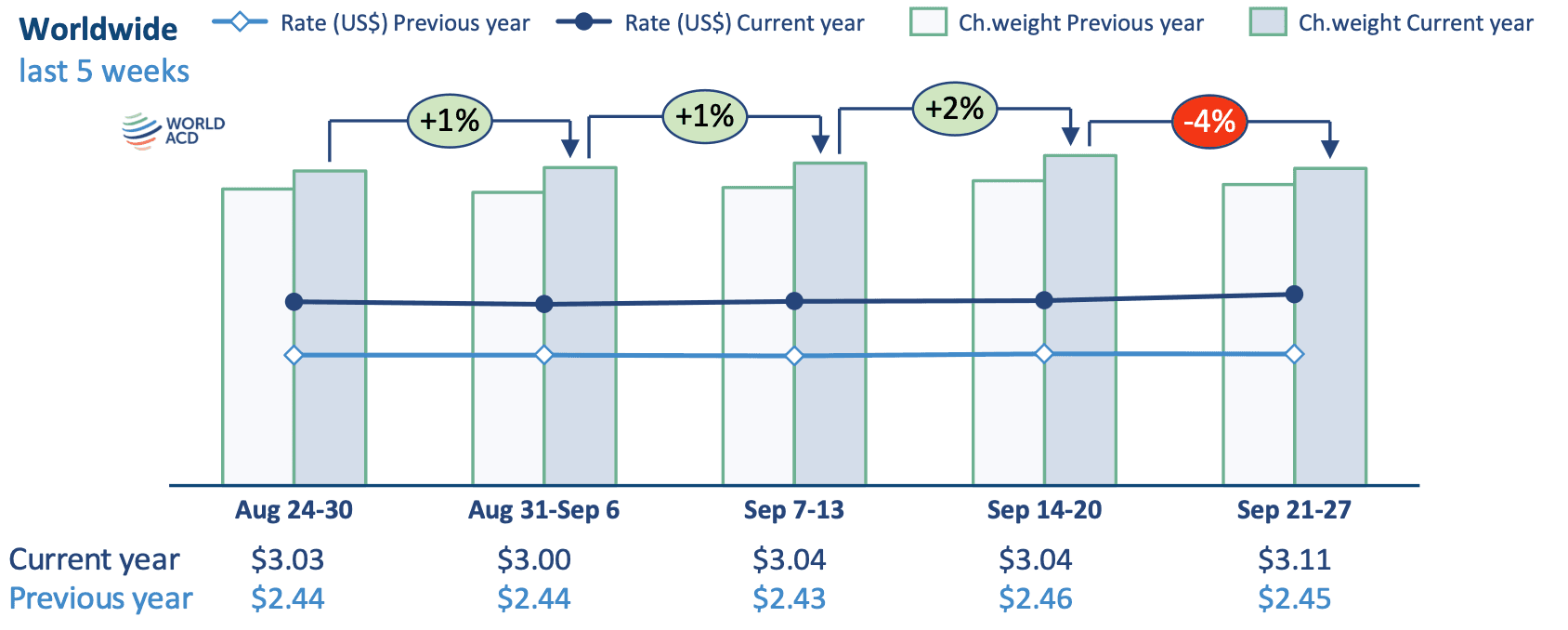
Global air cargo rates have experienced a reduction, marking the first significant decline after a period of sustained increases that began with the Middle East conflict. The overall Baltic Air Freight Index (BAI00) registered a 4.9% decrease in the week ending May 18. This downturn is primarily attributed to a fall in jet fuel prices, which directly impacts operational costs for air carriers.
While the recent drop offers some relief, current air freight rates are still substantially elevated compared to the same period last year. The conflict in the Middle East initially led to rerouting and increased demand for air cargo, pushing prices upwards. The current easing suggests a potential stabilization, though the market remains sensitive to geopolitical developments and fuel cost volatility.
For freight forwarders and shippers, this decline could translate into slightly reduced air freight costs, offering some breathing room in budgeting for urgent or high-value shipments. However, given that rates are still up year-on-year, it's crucial for ops managers to continue monitoring market fluctuations closely and to factor in the potential for renewed volatility. Capacity might also see minor adjustments as carriers react to changing fuel costs and demand patterns.
Looking ahead, the stability of air cargo rates will largely depend on the continued trajectory of jet fuel prices and the geopolitical situation in key regions. Any further de-escalation or sustained drop in fuel costs could lead to additional rate reductions, while new disruptions could reverse this trend.