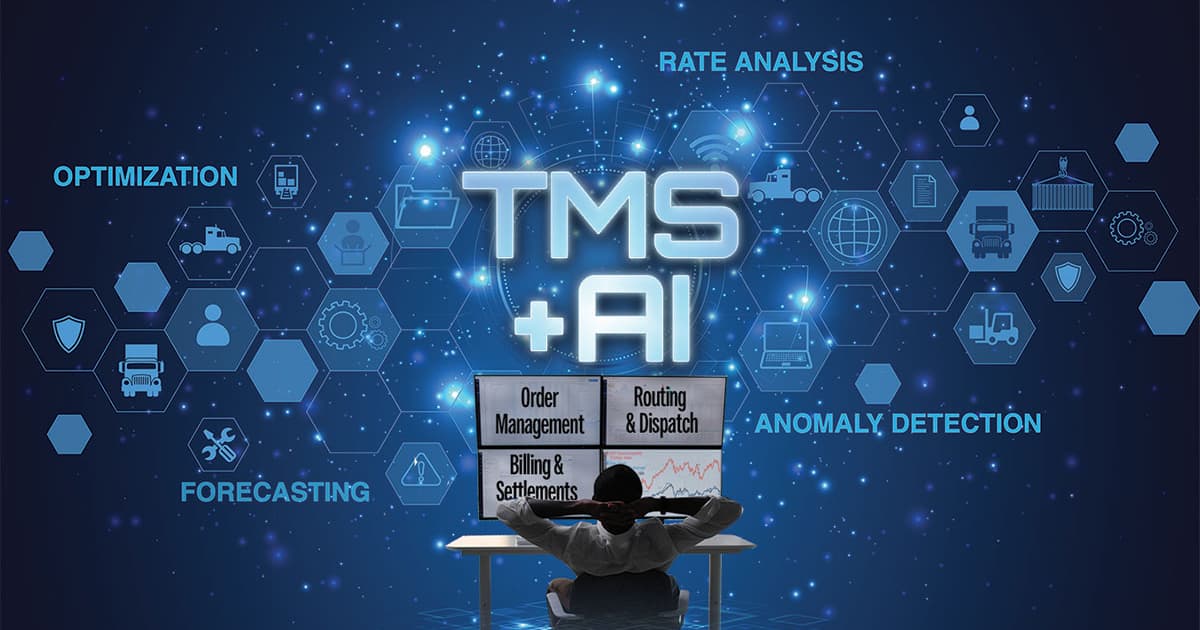
Artificial intelligence (AI) is progressively being adopted within transportation management software (TMS) to optimize various back-office operations for trucking companies and freight brokerages. This integration focuses on automating and improving tasks that traditionally require significant manual effort, such as load matching, route optimization, pricing, and administrative processing.
For freight forwarders and operations managers, this trend signifies a potential for increased efficiency and reduced operational costs. AI-powered TMS can offer more accurate real-time data analysis, leading to better decision-making regarding capacity utilization, carrier selection, and overall shipment execution. This could translate into faster quoting, more reliable transit times, and improved service levels for shippers. The enhanced automation may also help mitigate the impact of labor shortages in administrative roles within the logistics sector.
Looking ahead, the continued evolution of AI in TMS is expected to drive further innovation in predictive analytics and autonomous decision-making, potentially reshaping how freight is managed from booking to delivery.