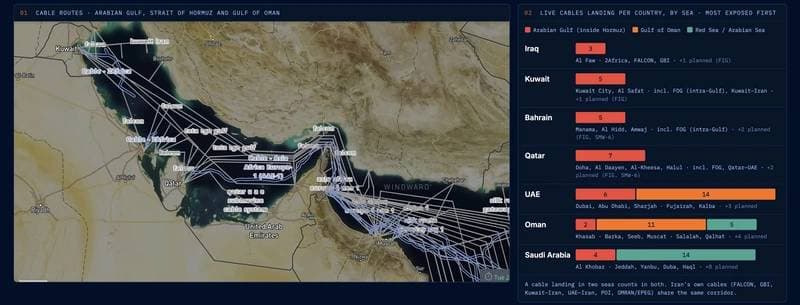
Iran has publicly identified subsea communication cables located in the Strait of Hormuz as potential targets. A spokesperson for the Islamic Revolutionary Guard Corps (IRGC) issued a warning, stating that new targets and advanced weaponry would be unveiled as the situation progresses. This declaration indicates a significant expansion of the ongoing conflict in the Gulf region.
This development introduces a new dimension to the existing geopolitical tensions, moving beyond traditional maritime vessel threats to critical underwater infrastructure. The Strait of Hormuz is a vital chokepoint for global oil shipments and international trade, making any threat to its infrastructure highly disruptive.
For freight forwarders and shippers, this escalation means an increased risk profile for transiting vessels and cargo through the Strait of Hormuz. The potential targeting of subsea cables could disrupt communication and navigation systems, leading to delays, increased insurance premiums, and rerouting considerations. Operational managers should monitor the situation closely, assess war risk surcharges, and explore alternative routing options if feasible, as the expanded scope of threats could impact supply chain reliability and costs.