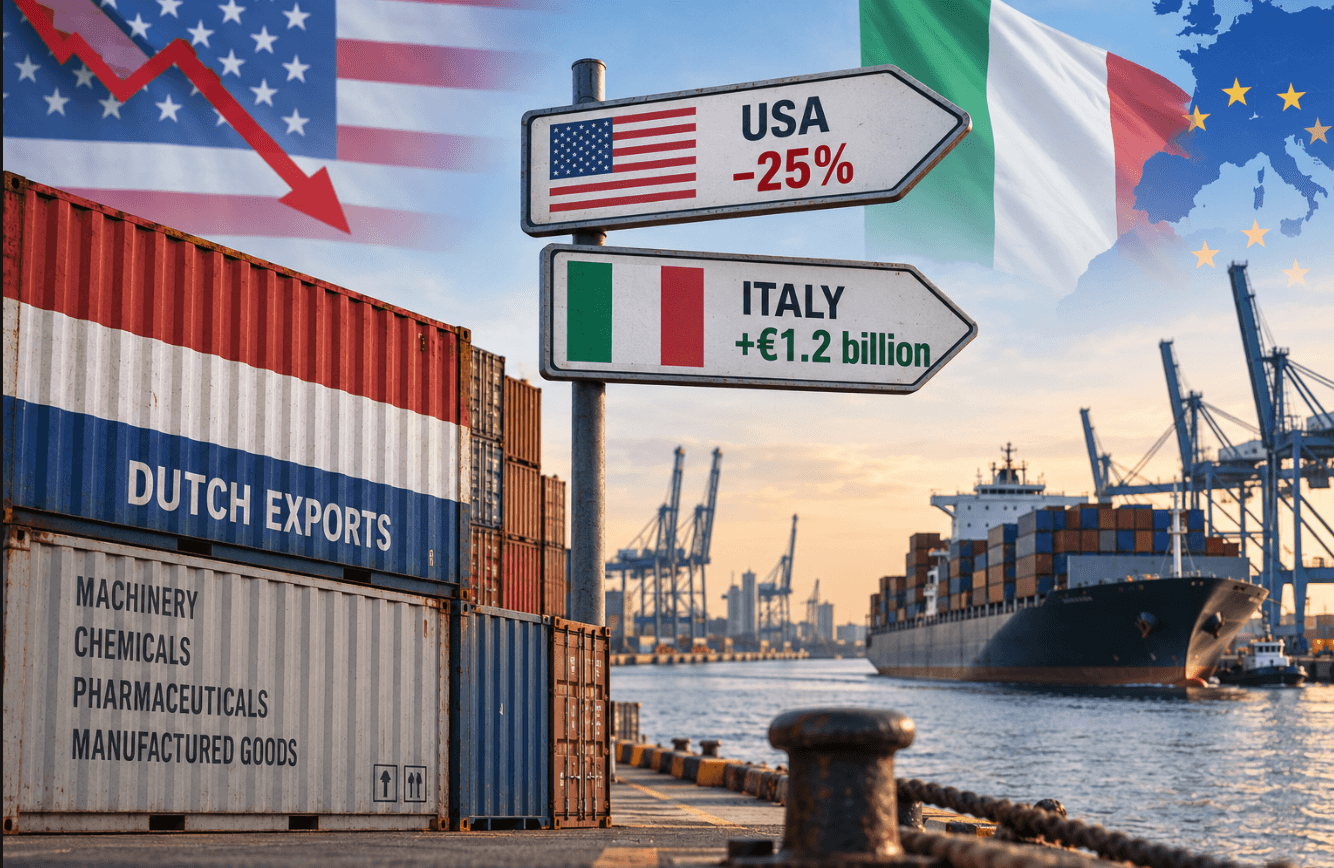
In early 2026, the Netherlands saw a substantial 25% decrease in its exports to the United States. This decline allowed Italy to move ahead of the Netherlands in the overall trade rankings between Europe and the US. Concurrently, a rise in energy imports further exacerbated the trade imbalance across the Atlantic.
This shift in trade dynamics is reshaping cargo flows, particularly impacting logistics operators and freight forwarders. The reduced volume from the Netherlands means less demand for specific shipping lanes and potentially altered vessel utilization for carriers serving this route. Conversely, Italy's increased trade activity may lead to higher demand for capacity and potentially increased rates on its transatlantic routes.
For freight forwarders and operations managers, this development necessitates a re-evaluation of routing strategies and capacity allocation for transatlantic shipments. They may need to adjust their booking patterns, explore new consolidation opportunities, or adapt to changes in carrier service offerings as trade lanes rebalance. The widening transatlantic imbalance suggests ongoing adjustments in supply chain planning will be required.