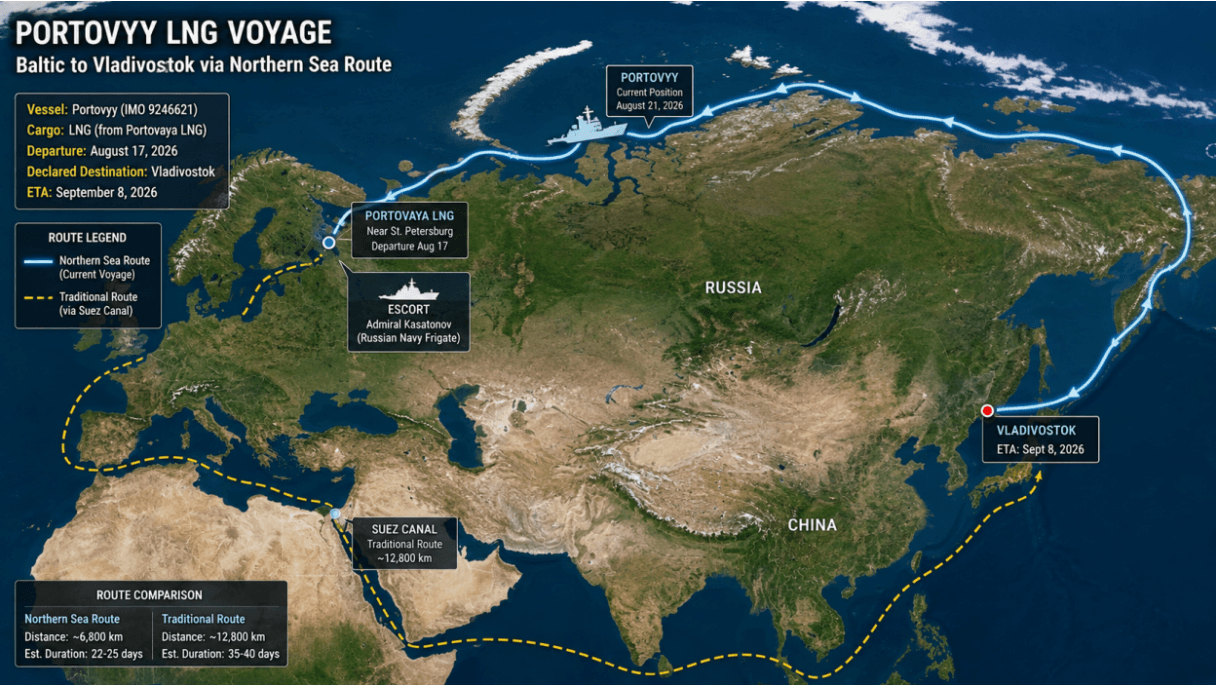
The Russian-flagged LNG tanker Portovyy recently undertook an unusual voyage, transiting from the Baltic Sea to Vladivostok in Asia through the Northern Sea Route (NSR). This journey was notably accompanied by a naval escort, highlighting the strategic importance and potential security considerations of this Arctic passage. The operation, orchestrated by Gazprom, serves as a trial for alternative shipping corridors for Russian liquefied natural gas (LNG) exports.
This initiative comes as Russia prepares for the implementation of more stringent European sanctions on its energy sector, expected to take effect in 2027. By exploring and utilizing the NSR, Russia aims to diversify its logistics infrastructure and secure new trade routes to Asian markets, mitigating the impact of future restrictions on traditional European routes.
For freight forwarders and shippers, this development signals a potential shift in global energy trade patterns and maritime routes. Increased use of the Northern Sea Route, while offering shorter transit times between Europe and Asia, presents unique operational challenges, including ice navigation, limited infrastructure, and higher insurance premiums. Forwarders should monitor the viability and frequency of such routes, as they could influence capacity, transit times, and costs for specialized cargo, particularly for energy products. The naval escort also underscores the geopolitical sensitivities and potential security risks associated with Arctic shipping.
Future developments will likely involve further assessments of the NSR's commercial feasibility and environmental impact. The success of this voyage could encourage more Russian energy companies to consider the Arctic route, potentially leading to increased investment in ice-class vessels and supporting infrastructure along the NSR.