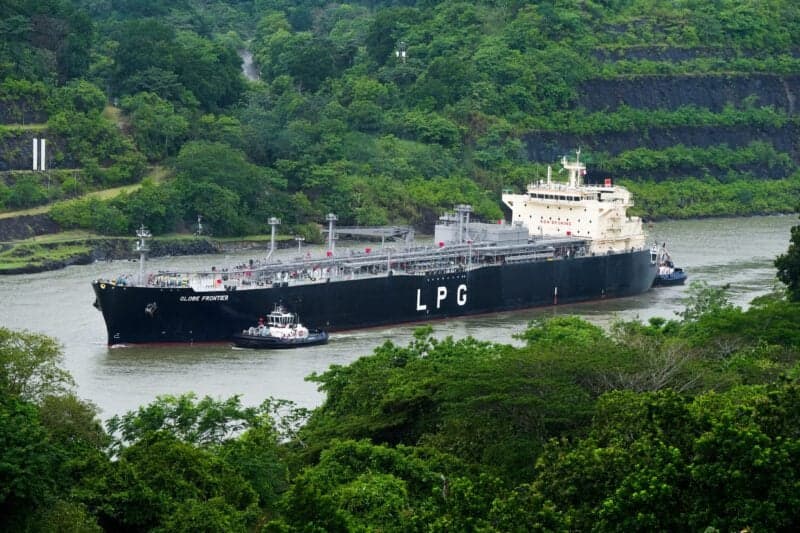
Exporters, notably Chevron Corp., are increasingly adopting ship-to-ship (STS) transfers for liquefied petroleum gas (LPG) shipments originating in the United States and destined for Asian markets. This strategic shift is a direct response to the persistent congestion and escalating transit fees at the Panama Canal.
Historically, the Panama Canal has been a critical waterway for efficient transit of LPG carriers between the US Gulf Coast and Asia. However, prolonged drought conditions have led to significant draft restrictions and daily transit slot reductions, causing delays and driving up auction prices for available slots to unprecedented levels. These operational challenges have made direct canal transits less economically viable and predictable for some bulk commodity flows.
For freight forwarders and logistics managers, this development signals a potential change in established energy supply chain routes. The adoption of STS transfers means that while direct canal transits might decrease for certain commodities, new transshipment hubs could emerge, offering alternative routing options. This could lead to increased complexity in vessel scheduling and potentially higher operational costs due to the additional handling, but it also offers greater flexibility and reliability in avoiding canal bottlenecks. Forwarders should monitor the efficiency and cost-effectiveness of these STS operations as they evolve, as they may become a more permanent feature of the LPG trade lane.
It remains to be seen how widely this shuttle trade will be adopted across other bulk commodities facing similar Panama Canal constraints, and whether canal authorities will implement measures to alleviate the current pressures.