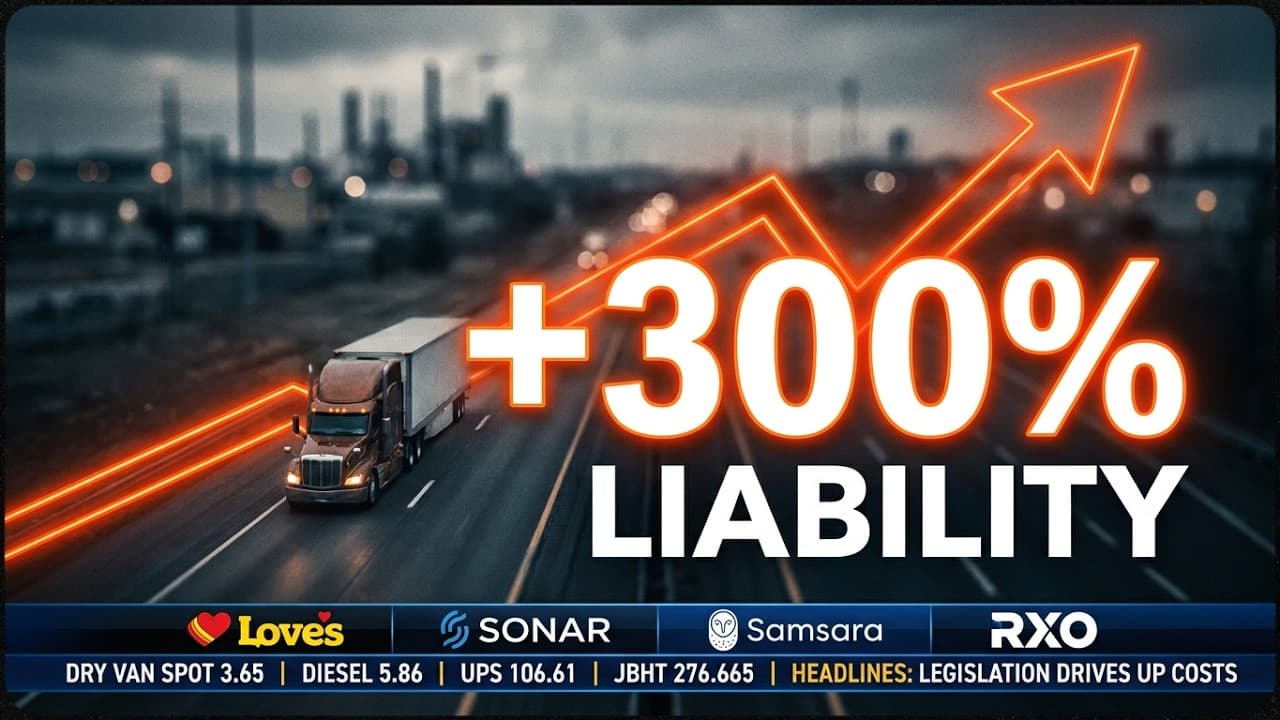
The trucking insurance market is currently in a state of flux, primarily due to legislative factors and a perceived lack of underwriting discipline, according to Myles Oppenheimer, CRO of Cover Whale. This combination is creating what he terms a 'self-inflicted wound' that traditional insurance providers are struggling to manage.
Historically, the industry has focused on 'nuclear verdicts' as the main driver of rising costs. However, this analysis suggests that broader legislative environments, which may influence liability standards and claims payouts, are exacerbating the issue. Coupled with insufficient rigor in assessing risks and setting premiums, the market has become unsustainable for many established insurers.
For freight forwarders and logistics professionals, this translates into higher operational costs and potentially reduced capacity in the trucking sector. Increased insurance premiums directly impact carriers, who may pass these costs on through higher freight rates. Furthermore, the withdrawal of traditional insurers could lead to fewer options for coverage, making it harder for smaller carriers to secure necessary insurance, potentially affecting their ability to operate and thus impacting overall trucking capacity and schedule reliability.