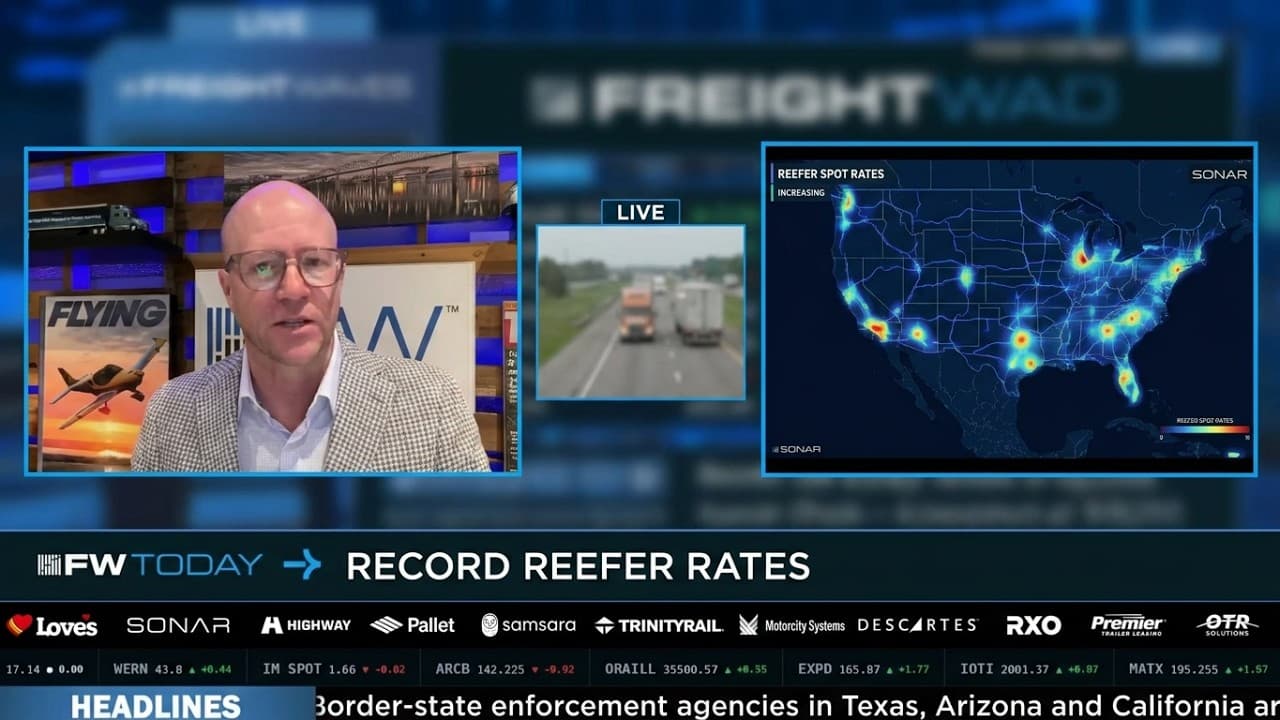
An intense heatwave currently gripping the Eastern United States, from the Gulf Coast up to Canada, is creating substantial pressure on the temperature-controlled freight sector. Heat index values are reportedly reaching as high as 114 degrees Fahrenheit, directly impacting the operational environment for refrigerated transport.
This weather phenomenon is leading to a surge in demand for reefer trucks. Consequently, reefer spot rates and tender rejection rates are escalating, nearing their historical maximums. The elevated temperatures are compelling some shippers to opt for refrigerated trailers even for cargo typically moved in dry vans, to prevent damage or spoilage. This shift further strains the already tight reefer capacity.
For freight forwarders and operations managers, this means anticipating higher costs and reduced availability for temperature-controlled shipments. Shippers with sensitive cargo may face increased surcharges and longer lead times for securing reefer capacity. It is crucial to monitor weather forecasts and market conditions closely, and to communicate proactively with carriers to mitigate potential disruptions and cost increases.