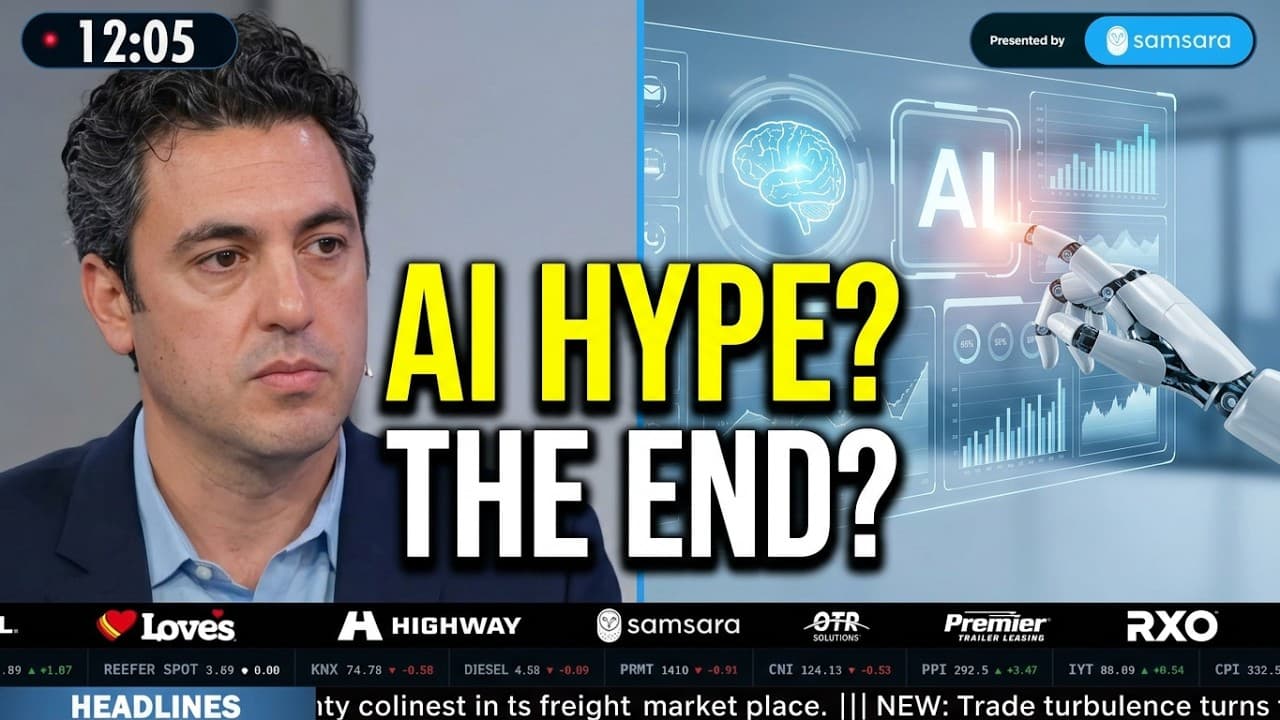
Eric Rempel, Chief Innovation Officer at Redwood, recently provided insights into the application of artificial intelligence within the logistics sector. His analysis focuses on differentiating between the speculative excitement surrounding AI and its concrete contributions to supply chain operations. Rempel highlighted that companies are increasingly integrating AI for various strategic reasons, aiming to enhance efficiency and decision-making.
The discussion also addressed the common concern about AI's effect on employment. Rempel suggested that while some roles might evolve or be automated, AI is also a catalyst for the creation of new job opportunities requiring different skill sets, ultimately reshaping the workforce landscape in logistics.
For freight forwarders and operations managers, this indicates a need to evaluate AI solutions critically, focusing on their proven ability to streamline processes, optimize routing, and improve predictive analytics rather than just adopting technology for its novelty. Understanding the practical applications of AI can lead to better resource allocation and potentially more competitive service offerings. The evolving job market also suggests a shift in required skills, emphasizing the importance of upskilling teams to manage AI-driven systems.