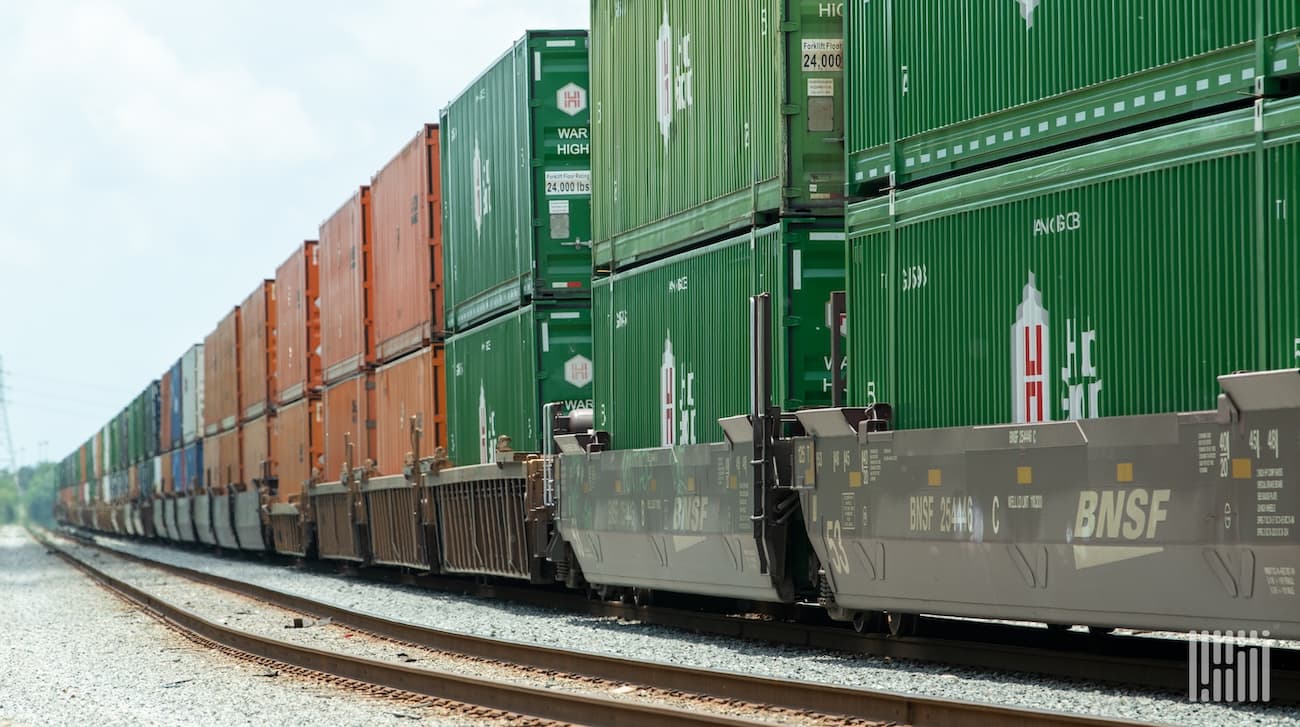
US railroads have recently reported a significant increase in intermodal volumes, accompanied by a rise in industrial product shipments. This growth suggests a clear trend where shippers are increasingly choosing rail transportation over trucking, likely driven by factors such as cost efficiencies, environmental considerations, or capacity availability.
For freight forwarders and logistics professionals, this shift implies potential changes in domestic routing strategies and capacity management. Increased demand for intermodal rail could lead to longer lead times or tighter capacity on key rail corridors, particularly for time-sensitive or high-volume shipments. Conversely, it might alleviate some pressure on the trucking sector, potentially impacting road freight rates and availability. Forwarders should monitor rail network performance and collaborate closely with rail providers to secure capacity and optimize transit times for their clients.