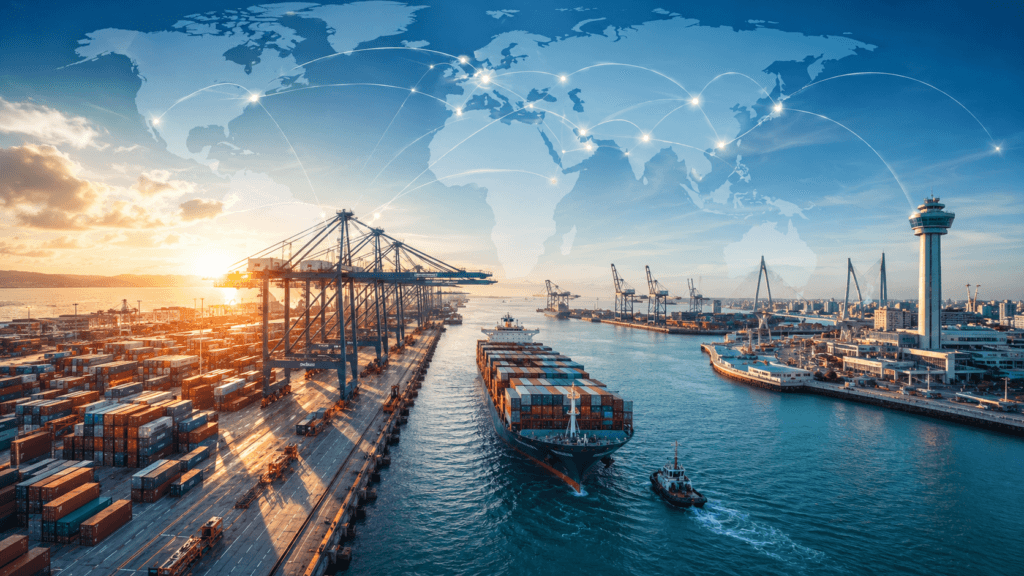
The global maritime logistics landscape is undergoing a significant shift, moving away from a concentration of cargo volume in East Asian gateways. A new wave of port development and expansion is occurring across the Middle East, North Africa, and Europe, positioning these regions as increasingly vital alternative trade hubs.
This decentralization is driven by international corporations actively diversifying their manufacturing and supply chain networks. As companies seek to reduce reliance on single regions and enhance resilience, the demand for efficient, world-class logistics infrastructure in new locations has grown.
For freight forwarders and supply chain analysts, this trend signifies greater flexibility in routing and potentially reduced transit times or costs for certain trade lanes. The emergence of these new hubs could lead to increased competition among ports, potentially improving service levels and infrastructure investment. Forwarders should monitor these developments to identify optimal routing strategies and leverage new capacity, especially for cargo originating from or destined for these developing regions. It may also impact vessel deployment strategies by carriers, leading to new service loops or adjustments to existing ones.
This ongoing development suggests a continued evolution of global trade patterns, with more balanced distribution of logistics capabilities across different continents.