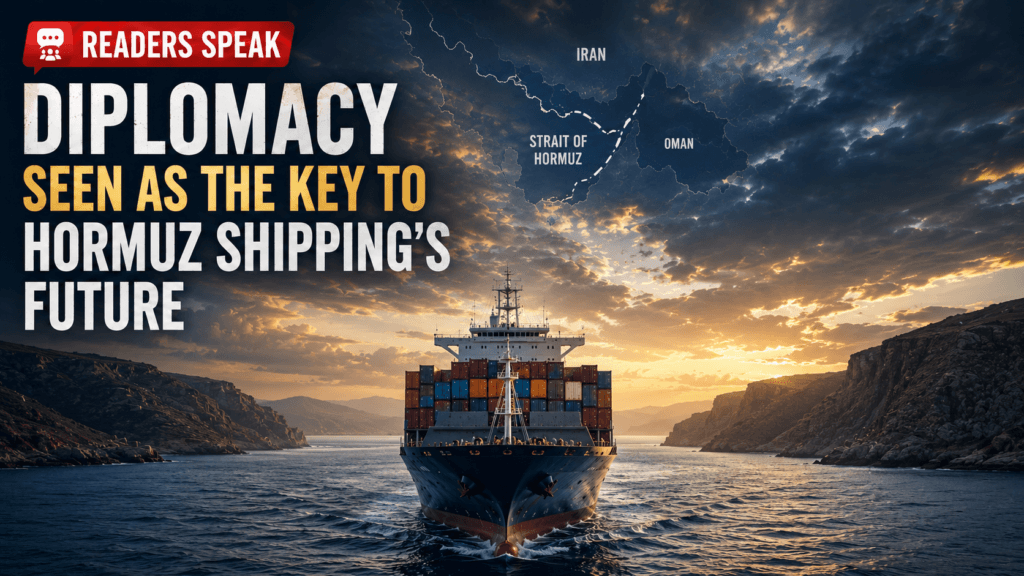
A recent survey conducted among industry professionals revealed a strong consensus that diplomatic progress will be the most critical element in determining the future of shipping operations through the Strait of Hormuz. Although other factors such as regulatory frameworks, military activities, and broader regional political dynamics are acknowledged as important, the poll's participants overwhelmingly emphasized the overarching influence of diplomatic solutions.
This perspective suggests that sustained efforts in international relations and dialogue are viewed as essential for mitigating risks and ensuring the smooth passage of vessels through this vital chokepoint. For freight forwarders and operations managers, this implies that while immediate geopolitical tensions and security measures are crucial considerations, the long-term stability and predictability of the Strait of Hormuz will largely depend on diplomatic breakthroughs. This could influence routing decisions, insurance premiums, and overall supply chain planning, with positive diplomatic outcomes potentially leading to reduced transit risks and costs.