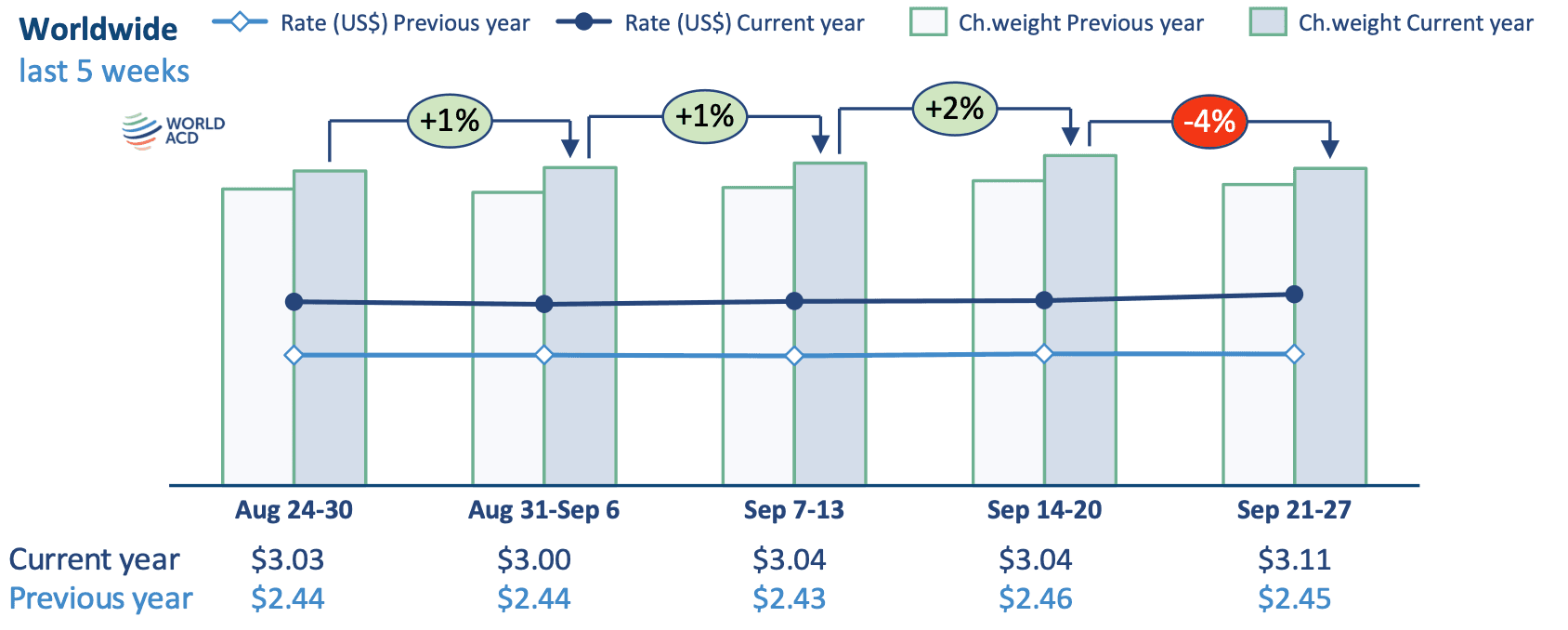
The Asia-Pacific (APAC) region maintains its position as the leading hub for global air cargo, consistently handling between 35% and 38% of total worldwide volumes. The current demand growth, estimated at around 8%, is not evenly distributed across all trade lanes but is instead heavily concentrated in specific sectors: e-commerce, electronics, and trade within Asia. This indicates a shift from a broad-based market expansion to more targeted growth areas.
For freight forwarders and operations managers, this trend suggests that capacity strategies are evolving. Air cargo carriers are increasingly focusing on "revenue engineering" and optimizing for "speed-to-market" execution. This means that while overall capacity might be stable or growing modestly, the allocation of that capacity is becoming more precise, targeting profitable routes and urgent cargo types. Forwarders should anticipate more tailored service offerings and potentially greater competition for space on key e-commerce and intra-Asia lanes. Furthermore, the emphasis on secondary hubs and emerging long-haul corridors could open new routing opportunities but also require careful planning to ensure seamless connectivity and competitive transit times.