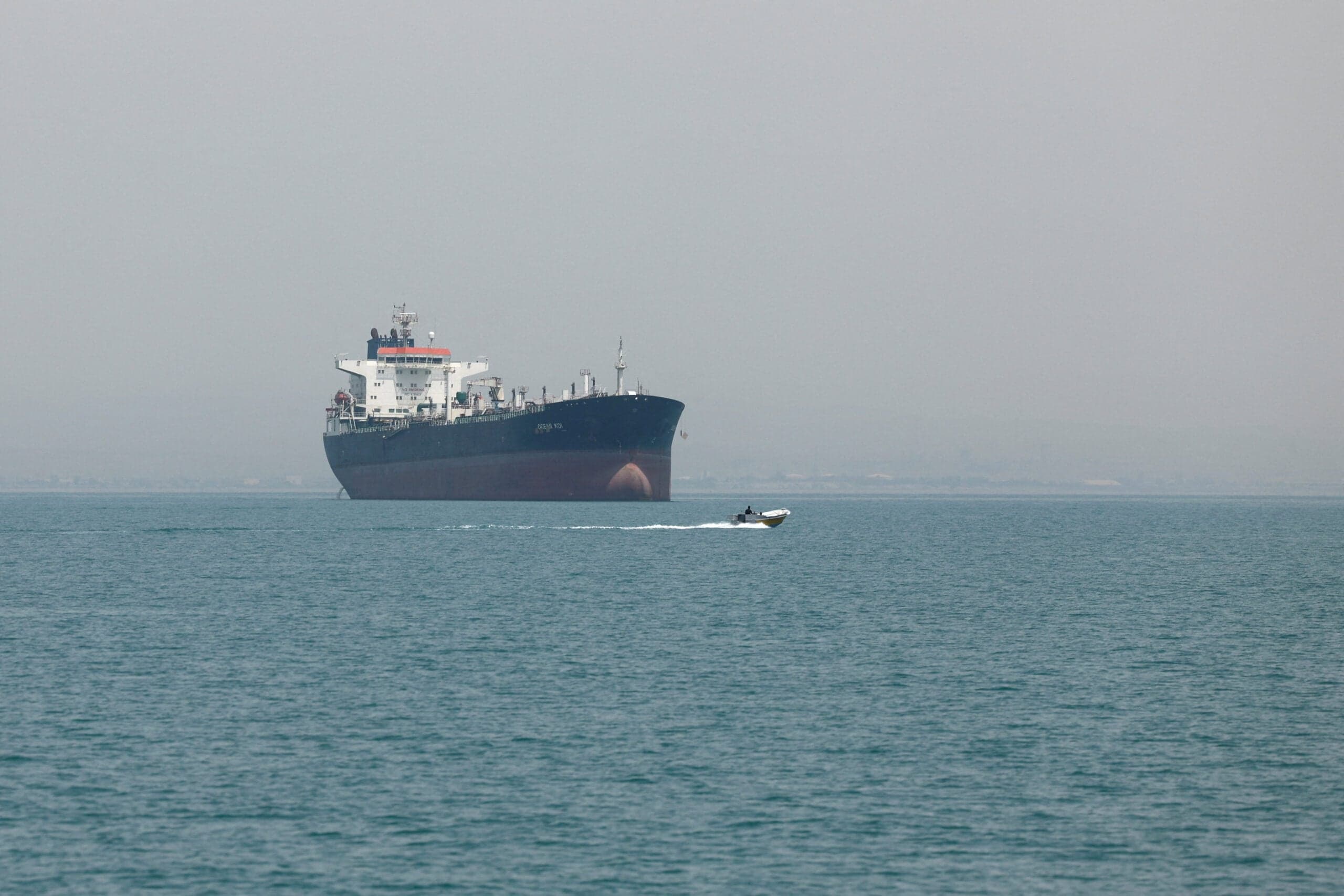
The U.S. Treasury Department recently announced sanctions against Iran's newly established Persian Gulf Strait Authority (PGSA). This move signifies a heightened response from Washington regarding Tehran's efforts to enforce a new transit regime in the Strait of Hormuz, which would require vessels to obtain permission to pass through.
The Strait of Hormuz is a vital maritime passage, connecting the Persian Gulf to the open ocean and serving as a crucial route for a significant portion of the world's oil and gas shipments. Iran's attempts to control transit through this international waterway have been a long-standing point of contention with the United States and its allies, who advocate for freedom of navigation.
For freight forwarders and shippers, this escalation introduces increased geopolitical risk and potential for disruption in a critical trade lane. While direct impacts on commercial shipping rates or capacity are not immediately clear, the heightened tensions could lead to increased war risk premiums for vessels transiting the region, affecting overall shipping costs. Forwarders should monitor the situation closely for any changes in transit advisories or insurance requirements, as well as potential delays or rerouting if the situation escalates further. The uncertainty could also influence carrier decisions regarding vessel deployment and scheduling in the Middle East.
The situation is expected to remain tense, with the U.S. reaffirming its commitment to freedom of navigation in international waters. Further diplomatic or economic actions from either side could impact the stability of maritime operations in the region.