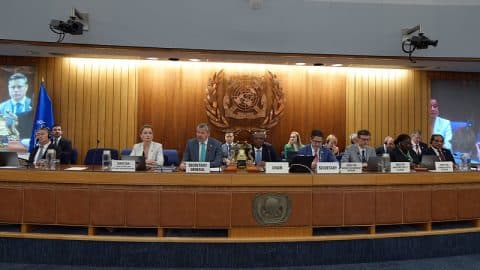
The International Maritime Organization's (IMO) Net-Zero Framework (NZF), a key initiative designed to achieve net-zero emissions in global shipping by approximately 2050, faced considerable obstacles during its review at the 84th session of the Marine Environment Protection Committee (MEPC 84) in early May. This framework includes a goal-based marine fuel standard and a global economic mechanism to drive decarbonization.
Simultaneously, the proposal for establishing an Emission Control Area (ECA) in the North-East Atlantic is reportedly making progress. This contrasting development highlights a disparity in the pace of implementing different environmental regulations within the maritime sector.
For freight forwarders and supply chain managers, the stalled progress of the IMO NZF introduces uncertainty regarding future global fuel standards and potential carbon pricing mechanisms. This delay could impact long-term strategic planning for vessel operations and fuel procurement. Conversely, the advancement of the North-East Atlantic ECA suggests that carriers operating in this region may face new compliance requirements and potentially higher operational costs sooner, which could translate into surcharges or adjusted rates for shippers moving cargo through these waters. Forwarders should monitor these regional developments closely to anticipate potential cost implications and adjust routing or carrier selection as necessary.