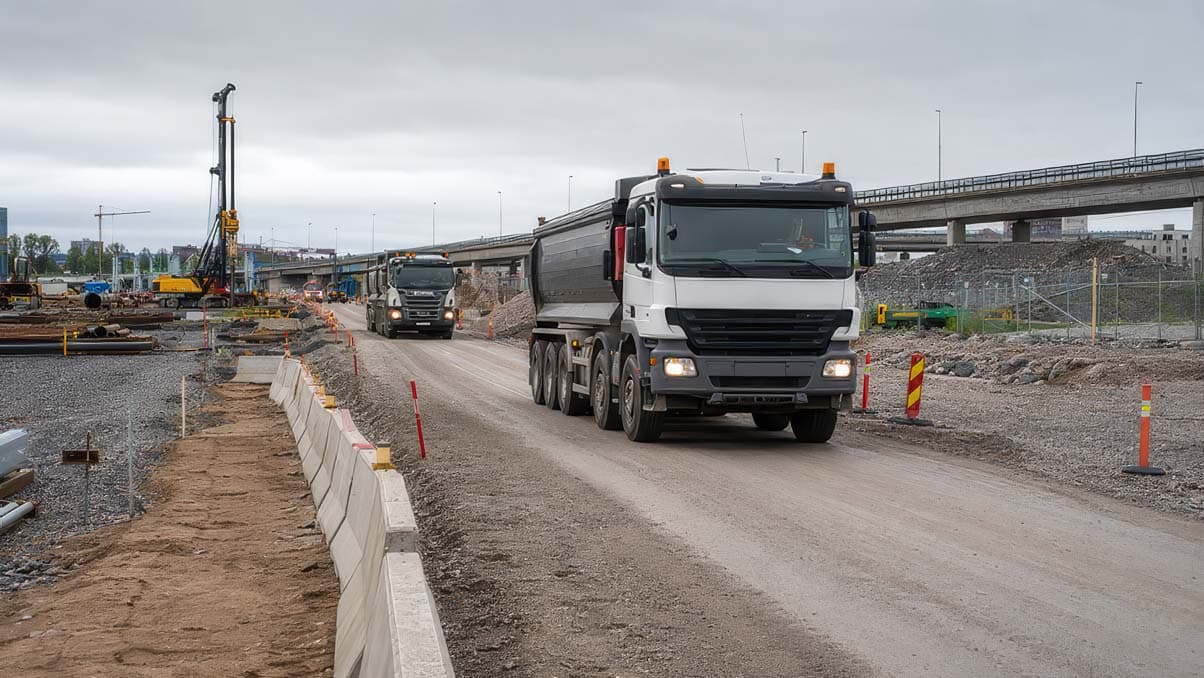
Daily operations at construction sites, industrial parks, and infrastructure projects involve heavy trucks and machinery navigating challenging terrains. The ground is often soft, wet, or uneven, which can lead to deep ruts, subsidence, and hazardous conditions if not properly managed. Ensuring a safe temporary transport route must begin well before any vehicle enters the site.
To mitigate these risks, several preparatory measures are essential. Firstly, a thorough assessment of the ground's bearing capacity is critical. This involves understanding the soil composition and its ability to support heavy loads. Without this, the risk of vehicles getting stuck or overturning increases significantly. Secondly, proper surface preparation is vital. This might include compacting the soil, adding a stable sub-base, or implementing drainage solutions to manage moisture.
For freight forwarders and logistics managers, understanding these requirements is crucial when planning deliveries to project sites. It directly impacts the safety of drivers, the integrity of cargo, and the efficiency of operations. Delays due to vehicles getting stuck or routes becoming impassable can lead to significant cost overruns and project delays. Forwarders should collaborate closely with site managers to ensure that appropriate temporary road infrastructure is in place, potentially requiring the use of specialized road plates or mats to create stable, load-bearing surfaces. This proactive approach minimizes risks and ensures smooth, timely deliveries for oversized or heavy-lift cargo often associated with such projects.