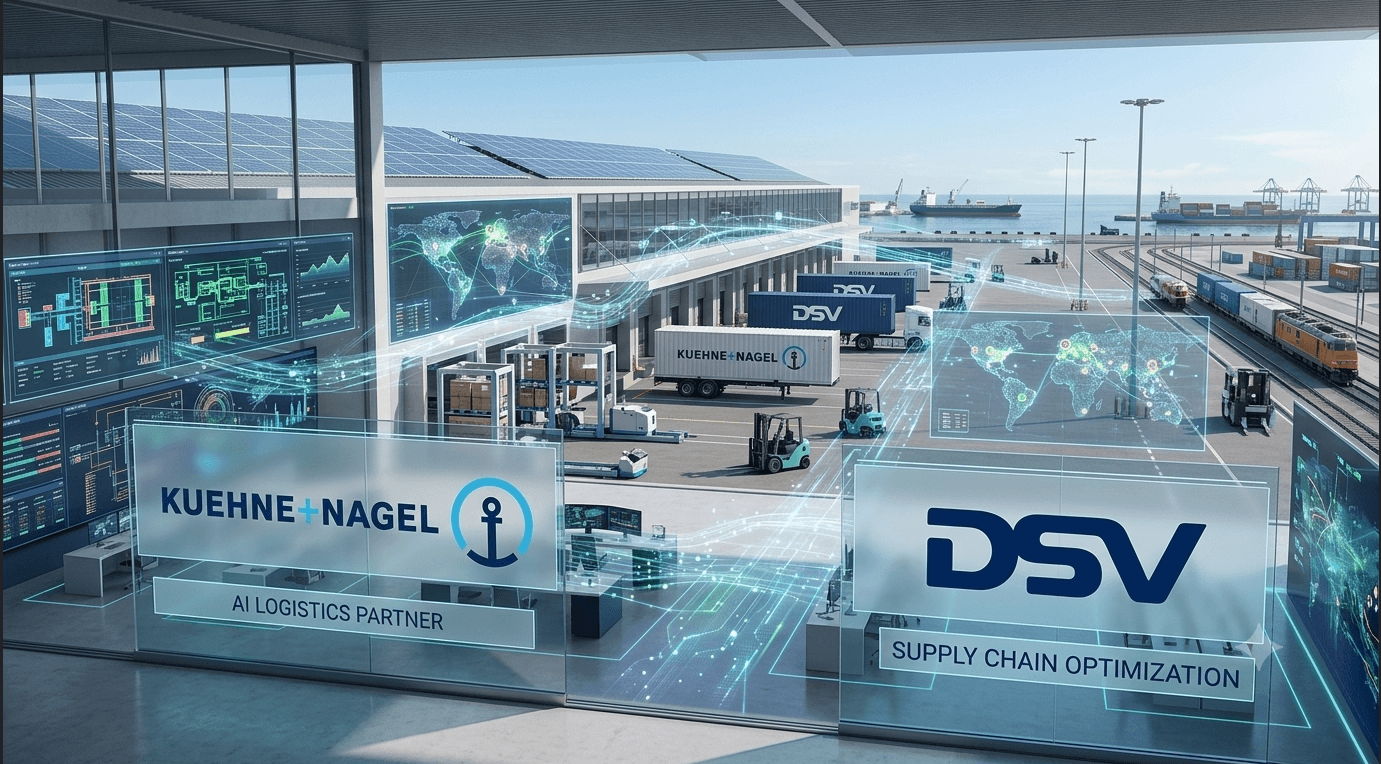
The freight forwarding industry is currently navigating a significant shift driven by advancements in artificial intelligence. Major players DSV and Kuehne+Nagel are responding with differing strategies to leverage AI for future growth and efficiency.
DSV appears to be considering a strategy focused on large-scale transformation, potentially involving substantial acquisitions to expand its capabilities and market share. This approach suggests a long-term vision for integrating AI across a much larger operational footprint, aiming for a comprehensive overhaul of its service delivery.
In contrast, Kuehne+Nagel is reportedly concentrating on more immediate operational gains through AI implementation. This could involve deploying AI solutions to optimize existing processes, enhance efficiency in areas like route planning, cargo tracking, and administrative tasks, with an eye on measurable improvements by 2027.
For freight forwarders and operations managers, these diverging strategies highlight the ongoing debate within the industry: whether to pursue ambitious, decade-scale transformations or to prioritize more incremental, near-term operational enhancements. Both approaches have implications for how services will be delivered, how capacity will be managed, and how competitive pricing will evolve. Forwarders should monitor these developments closely as they may influence partnership opportunities, technology adoption trends, and the overall efficiency of global logistics networks.