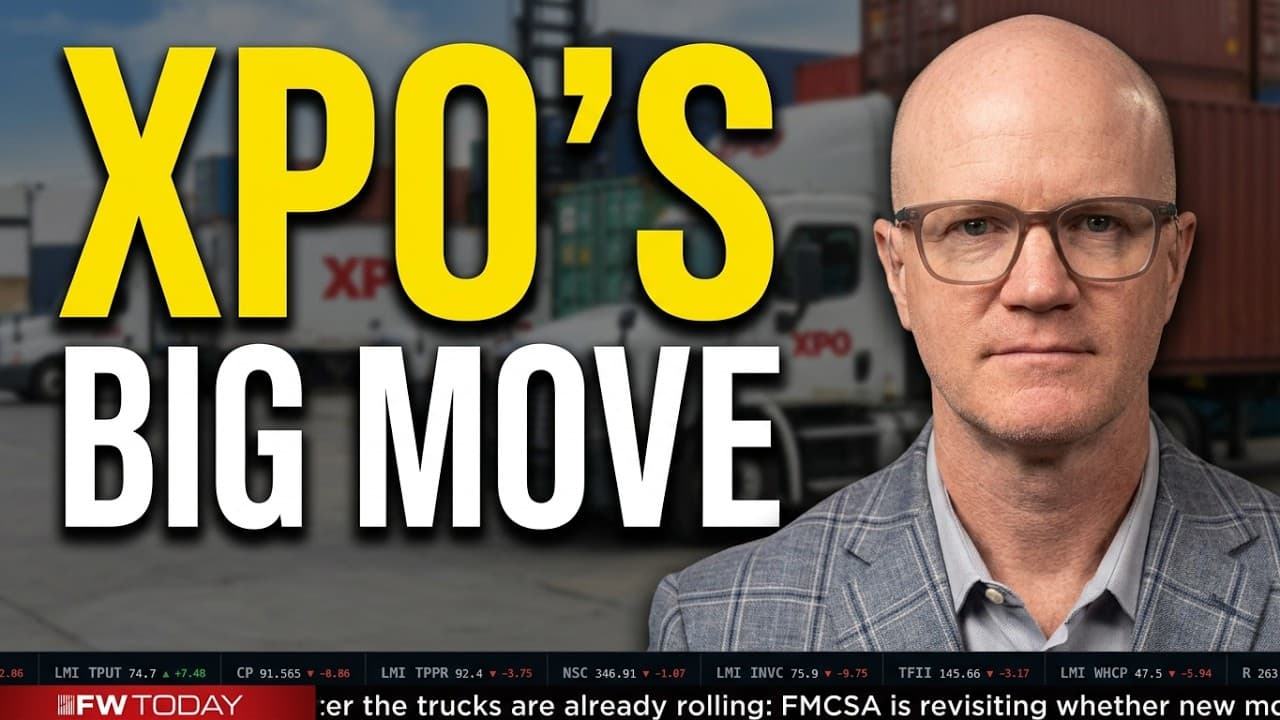
Dennis McCaffrey, Senior Vice President at RXO, provided insights into the strategic transformation of XPO, and subsequently RXO. He highlighted the surprising decision by Brad Jacobs to pivot XPO's business model from a predominantly asset-light brokerage approach to an asset-heavy operation. This monumental shift was primarily driven by the acquisition of Con-way, a move that significantly altered XPO's operational structure and market positioning.
Historically, XPO had focused on a brokerage model, leveraging third-party assets rather than owning a large fleet. The integration of Con-way, a company with substantial physical assets, marked a departure from this strategy, establishing XPO as a major player with extensive owned infrastructure.
For freight forwarders and operations managers, this strategic pivot by a major logistics provider like XPO (and now RXO) signifies a consolidation of power and capacity within the industry. An asset-heavy approach can lead to more stable capacity and potentially more predictable service levels on certain lanes, especially for less-than-truckload (LTL) and full-truckload (FTL) services. However, it also means less reliance on external carriers for XPO/RXO, which could influence market dynamics and pricing for other brokers and smaller carriers. Shippers might find more integrated solutions, while forwarders might need to adapt their carrier networks to account for the increased in-house capabilities of such large players.