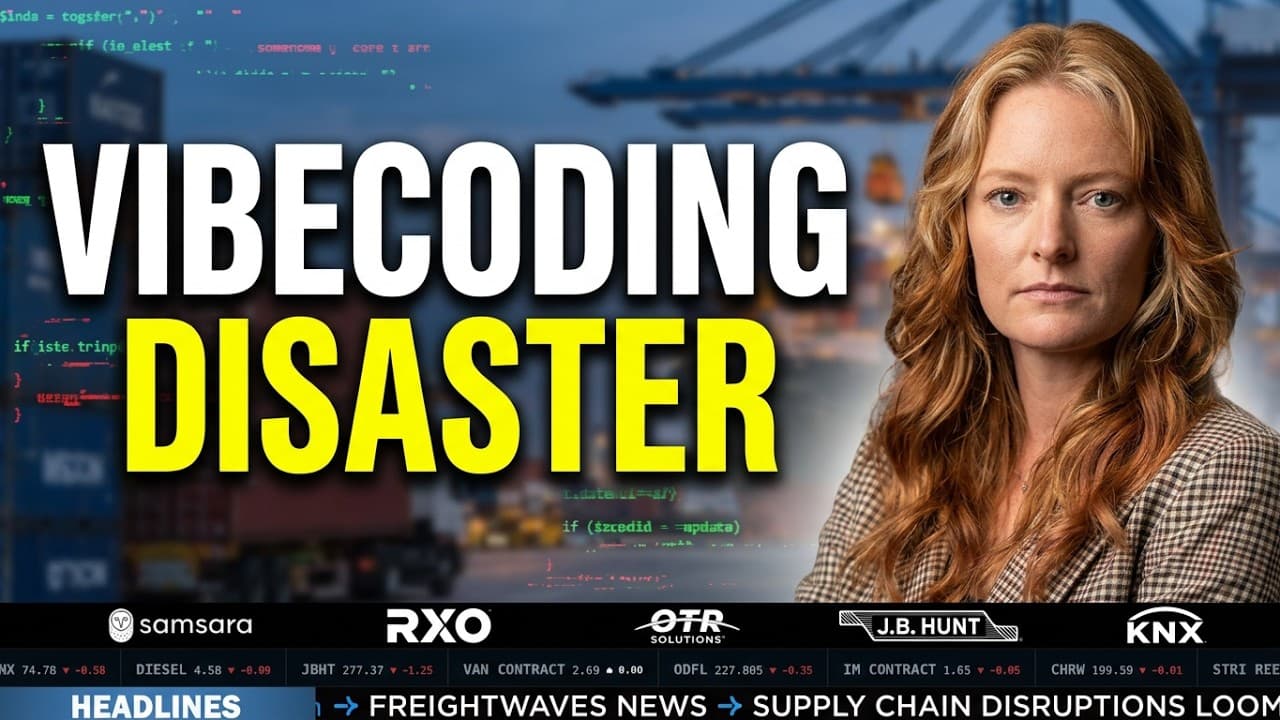
Alyssa Norcross, a Group Product Manager at Revenova, asserts that creating an effective Transportation Management System (TMS) demands a rigorous and professional methodology, rather than relying on informal or ad-hoc development practices, which she terms "vibecoding." Norcross highlights that such casual development is unsuitable for the intricate demands of modern logistics.
She advocates for the implementation of enterprise-grade TMS solutions that are built upon established and reliable infrastructure, citing platforms like Salesforce as examples. The core argument is that these systems must offer significant functional depth, robust integration capabilities with other essential tools, and stringent security measures to protect sensitive operational data.
For freight forwarders and operations managers, this perspective underscores the importance of investing in proven, scalable TMS technology. Opting for informally developed systems can lead to operational inefficiencies, data security vulnerabilities, and a lack of necessary features for managing complex supply chains. A well-integrated, secure, and feature-rich TMS is crucial for optimizing routing, tracking shipments, managing documentation, and ensuring compliance, ultimately impacting efficiency and cost-effectiveness.