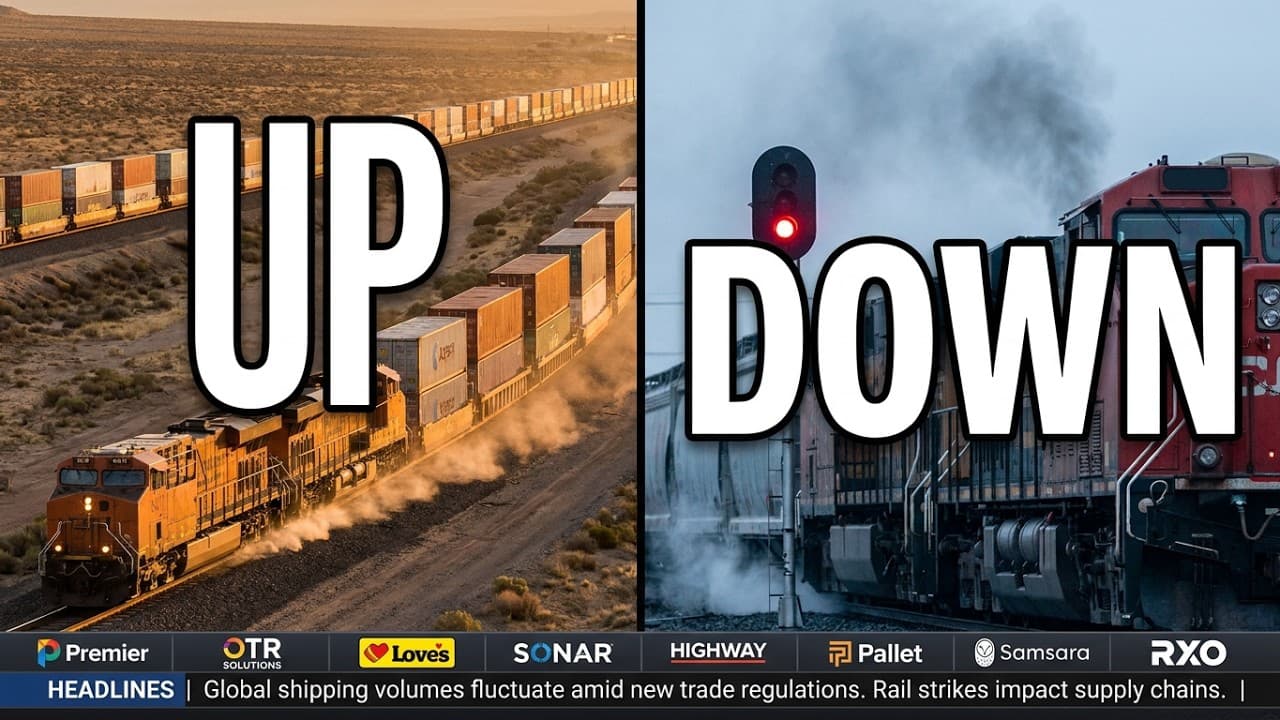
US intermodal rail volume saw a robust 10% increase last week, continuing a strong growth streak. This surge in traffic, while indicating healthy demand, is concurrently causing significant network congestion across major US railroads. Data indicates that train speeds have plummeted to their lowest points in 10 to 20 months, directly impacting transit times and schedule reliability.
For freight forwarders and operations managers, this situation means longer lead times for rail-dependent shipments and increased unpredictability in delivery schedules. The slowdowns could lead to higher demurrage and detention charges if containers are not cleared promptly at rail ramps. Forwarders should proactively communicate potential delays to shippers and consider alternative routing or modes for time-sensitive cargo where feasible. Capacity might appear available, but the effective transit speed is severely degraded.
In contrast to the US, Canadian intermodal volumes are declining, creating a stark contrast in North American rail performance. This divergence suggests differing market dynamics or operational capacities between the two countries' rail networks.