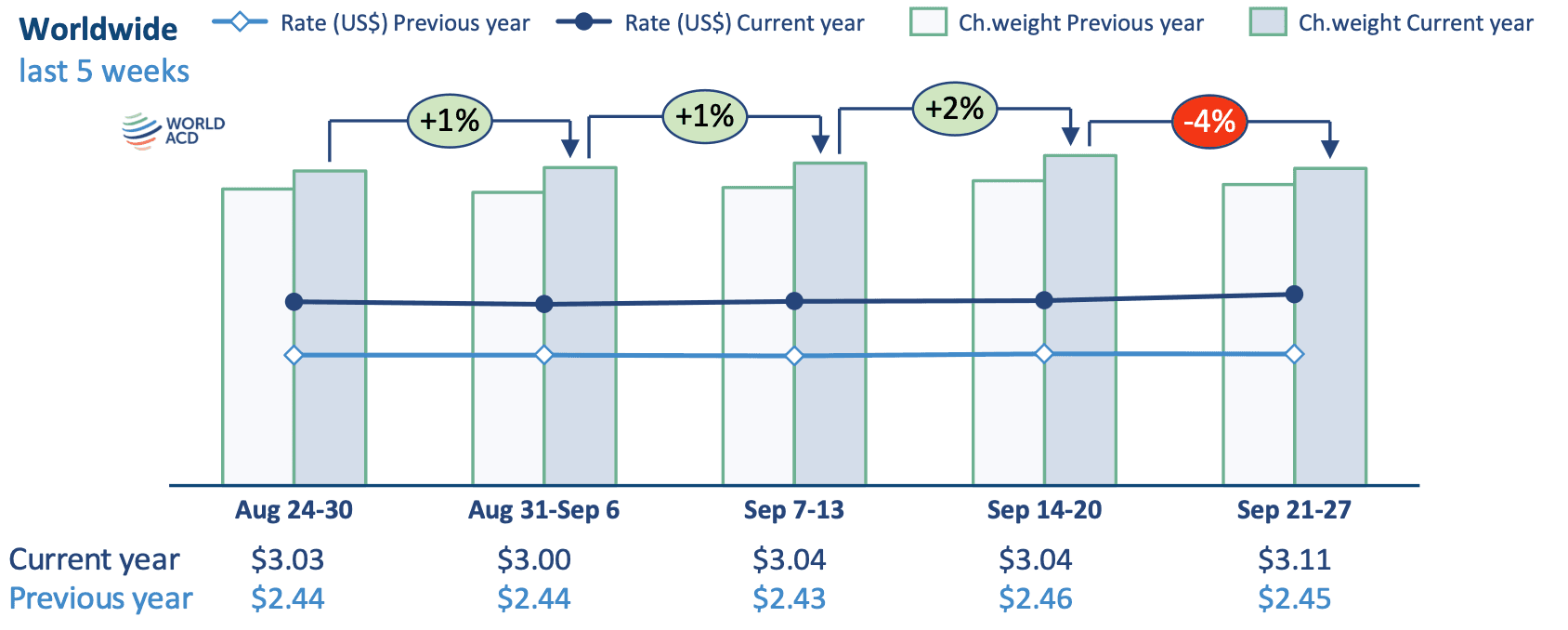
Airfreight rates on the Transpacific trade lane experienced continued growth throughout May, though the pace of these increases notably decelerated as the month progressed. Concurrently, air cargo prices for services originating in Asia and destined for Europe appeared to reach a plateau, indicating a stabilization after previous fluctuations.
The ongoing conflict in the Middle East has been a significant driver of rising airfreight rates since the end of February. This geopolitical situation has led to a tightening of available air cargo capacity and necessitated longer flight routings, particularly for services transiting or avoiding the affected regions. These operational adjustments contribute to higher fuel consumption and increased operational costs for carriers, which are then reflected in freight rates.
For freight forwarders and operations managers, this trend suggests a potential easing of upward rate pressure on key lanes, particularly Asia-Europe. However, the sustained impact of the Middle East conflict means that capacity remains constrained and longer transit times are still a factor for certain routes, requiring careful planning and potentially higher costs for affected shipments. Forwarders should continue to monitor geopolitical developments and their influence on air cargo networks, especially regarding capacity and routing options.