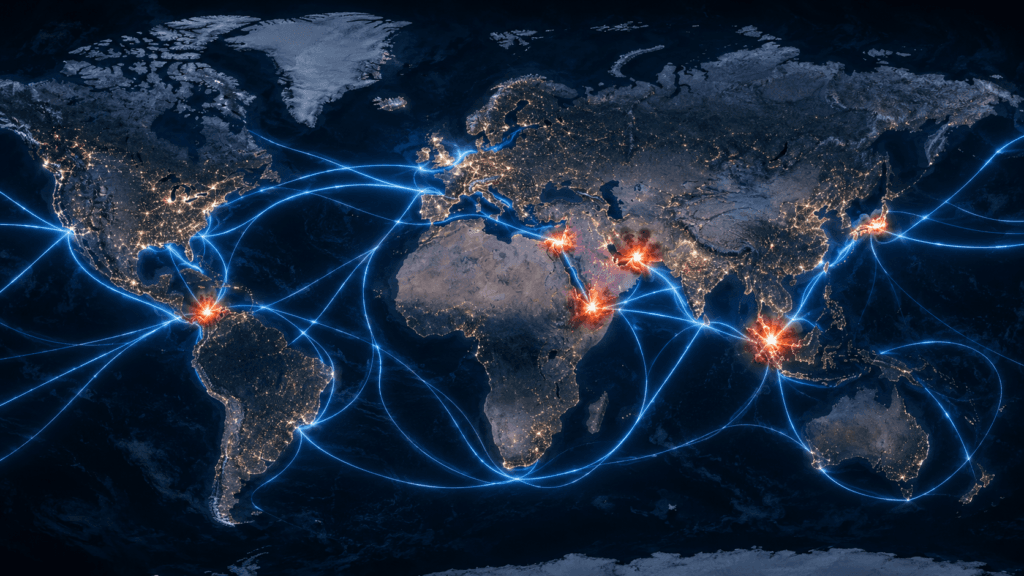
For decades, the primary determinant for maritime routing was minimizing distance, aiming for the lowest fuel consumption and fastest transit times. However, recent geopolitical developments have fundamentally altered this logic.
Today, routing decisions are heavily influenced by a complex interplay of political stability, trade disputes, and regional conflicts. This means that factors such as avoiding certain waterways due to security risks, navigating sanctions, or aligning with specific political blocs now take precedence over simply finding the shortest path.
For freight forwarders and operations managers, this paradigm shift necessitates a more intricate approach to logistics planning. It requires constant monitoring of global political landscapes, assessing potential disruptions, and diversifying routing options to mitigate risks. This can lead to longer transit times and potentially higher costs due to less direct routes or increased insurance premiums. Supply chain resilience has become a critical consideration, often outweighing pure cost efficiency.
Looking ahead, carriers and shippers will likely continue to invest in advanced risk assessment tools and flexible logistics networks. The emphasis will remain on building robust supply chains that can withstand unforeseen geopolitical shocks, further integrating political analysis into operational decision-making.